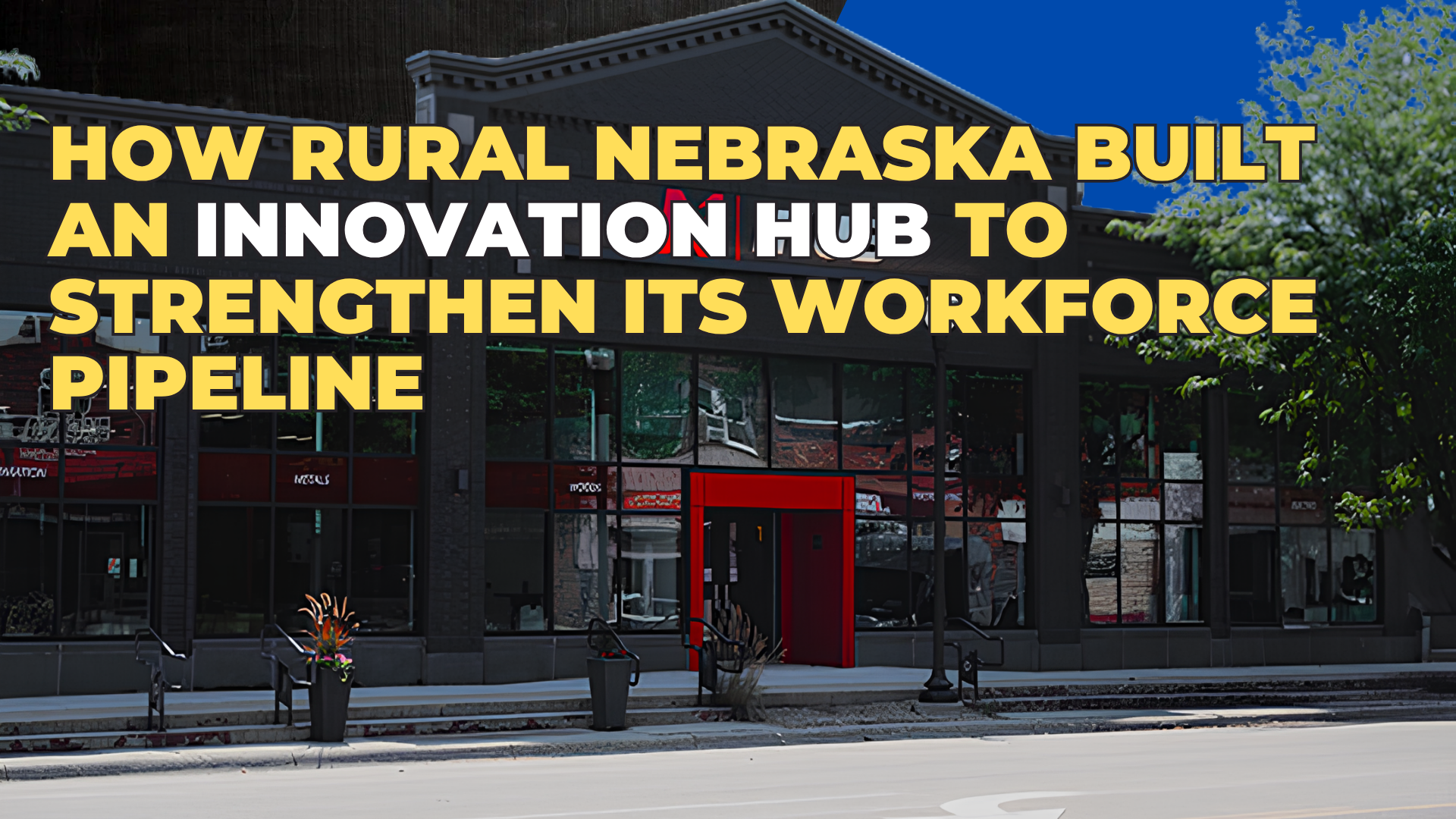
How Rural Nebraska Built an Innovation Hub to Strengthen Its Workforce Pipeline
Rural America is home to thriving manufacturers and growing demand for technical talent. Yet access to career exposure and training


Technical education is entering a year where “what you teach” is being reshaped by forces that sit well outside the classroom—energy, national security, supply chains, data centers, and rapid shifts in how technology is built, deployed, and maintained.
In the 2026 Predictions episode of The TechEd Podcast, Matt Kirchner frames these predictions as convergences: not single trends in isolation, but the overlap of multiple disciplines that will change what schools and employers prioritize in the next 12 months.
The big picture: in 2026, technical education will be pulled faster toward energy + infrastructure, geopolitics + supply chains, and automation + AI than most curriculum cycles can accommodate. Expect major demand for programs tied to data centers, nuclear energy, HVAC, GIS, rare earths, defense manufacturing, robotics, entrepreneurship, and quantum-adjacent skills. Also expect major changes to which higher ed institutions grow the fastest; “marketing goes STEM”; and the resurgence of the ownership economy.
Now, if you want to really dig into each prediction, here they are:
In 2026, the most important shift won’t be whether AI is “allowed” in education, it will be how you use it without letting it replace learning. Students are already using generative AI in and out of school, so education needs to move past the argument and into responsible implementation.
What changes in 2026
What to do now
In 2026, expect rising interest and investment in rare earth minerals programs in the U.S. Currently, China accounts for 60% of all global mine production and 90% of all refined production of rare earth minerals. Efforts are underway in America, Europe and Australia to create new supply chains for rare earth minerals. But the effort will require having enough programs in our colleges to support a strategic investment in rare earth minerals in the U.S.
This is not a niche issue. Rare earths sit underneath electrification, advanced manufacturing, defense supply chains, and consumer electronics—meaning the talent pipeline becomes a strategic constraint.
According to Jim Rankin – president of the South Dakota School of Mines at the time he appeared on The TechEd Podcast – we need four disciplines to produce the talent needed for rare earth mineral mining and refinement: geology, mining, mining engineering, geology engineering.
What changes in 2026
What to do now
Geographic Information Systems (GIS) is the combination of maps/geography with tabular data—so you can analyze real-world issues through both location and information. GIS is growing across emergency response, urban planning, environment, transportation, distribution/logistics, public health, and agriculture.

One major signal of momentum: the University of Cincinnati secured a GIS-related software donation valued at $158 million.
What changes in 2026
What to do now
Defense technology will play a major role in education in 2026—even if education calls it something else. Companies like Palmer Luckey’s Andruil are developing tactically-integrated unmanned aerial systems, unmanned combat aerial vehicles, quad copters, drones using vision systems, air breathing cruise missiles, autonomous underwater vehicles, ground based sensors, autonomous submarines, and the list goes on and on.
Let’s be clear on the boundary: education should not be teaching “AI-driven munitions.” But the underlying technologies—drones, UGVs, aerospace systems, advanced materials, sensors, autonomy, and the edge-to-cloud continuum—are broadly applicable and will increasingly show up in programs because they matter economically and strategically.
What changes in 2026
What to do now
The ownership economy is an economic model that broadens access to wealth creation by providing individuals with a meaningful ownership stake in appreciating assets, particularly homes and businesses.
Ownership changes incentives and behavior. And when ownership feels out of reach (for many younger people), it creates economic and social instability. Just look at broader forces like the gig/shared economy and the barriers Gen Z faces in real estate access. Education can turn that tide for the next generation by creating business-savvy students and creating opportunities to earn-and-learn so they can build wealth while they’re young.
What changes in 2026
What to do now
Quadrupeds and humanoids are everywhere at tradeshows and across TikTok, but so far very few educators are using them to teach meaningful edge-to-cloud skills yet.

It’s not that humanoids don’t belong in the classroom; they do. In fact, with the proliferation of humanoids in China, expect to see more robots making their way to the U.S. Ashley Furniture CEO Todd Wanek predicts we’ll have 50 billion humanoid robots in the United States by 2050.
In education so far, humanoids have been limited to out-of-the-box remote-controlled gadgets – no more than a fun show-piece. In 2026, expect to see more focus on learning outcomes for humanoid and quadruped robots. Use them to teach autonomy, sensors, compute, positioning, electrification, LiDAR, vision, telemetry, and advanced systems integration.
What changes in 2026
What to do now
What is biomimicry? It’s the the idea of taking inspiration from nature to improve design. Examples include germ-resistant materials inspired by shark skin and Japan’s bullet train nose design inspired by the kingfisher’s beak. This year, engineering and design students will incorporate more ideas from nature into their models.
What changes in 2026
What to do now
Tens of billions of dollars are being spent on quantum computing. Expect education to reflect that with increased focus and pathways in 2026. There are applications for quantum computing across AI, pharmaceuticals, healthcare, finance, and cybersecurity. Tie that to career growth in quantum software/hardware engineering, algorithms, and quantum physics.

What changes in 2026
What to do now
Where does marketing belong? Once a primarily communications- and business-related subject, marketing is going STEM in 2026. For years, advertising has become increasingly data-driven, automated, and optimized by AI. And while print isn’t completely ‘dead,’ it’s barely hanging onto relevance. Even SEO, the gold-standard in digital marketing for the last 15 years, is being quickly replaced by AEO – AI Engine Optimization.
Matt cites reporting that AI-powered performance campaigns deliver higher returns, and that AI-powered search campaigns can drive materially higher conversions at similar cost. It completely changes how marketers think about their discipline.
What changes in 2026
What to do now
In a world of declining enrollment and shifting perceptions of four-year degrees, smaller institutions that morph quickly—by modularizing programs, going competency-based, and pivoting fast to applied AI and tech—can gain an edge over slower-moving large institutions.
In larger schools, too much friction (accreditation inertia, entrenched systems, slow change) creates a bottleneck to innovation. By the end of 2026, we’ll see examples of small institutions staying relevant while some larger peers struggle to pivot.
What changes in 2026
What to do now

Nuclear energy becomes a much bigger theme in 2026—driven by energy demand, competitiveness, and data center proliferation.
By 2024 China had roughly matched the U.S. in operating nuclear plants (55 vs. 54), while having far more under construction (31 vs. 1), with a massive cost/time burden of modern U.S. builds. Patrick O’Brien talked in depth about the resurgence of nuclear energy and SMRs (small modular reactors) on The TechEd Podcast.
What changes in 2026
What to do now
The scale of data center investment is the kind of trend that quietly rewrites regional labor markets.
Vantage Data Centers breaking ground on a $15B data center campus for Oracle and OpenAI in Port Washington, Wisconsin. On estimate predicts U.S. large tech firms will spend about $400B on AI infrastructure in a single year, and that $3T–$4T could be spent on AI infrastructure by the end of the decade.
For educators, there is a wealth of career opportunities in and around new data centers: electricians, HVAC technicians, project managers, maintenance, plus cloud/AI/IT operations roles, in addition to apprenticeship recruiting and long-term work for trades.
What changes in 2026
What to do now
Smart HVAC/R is the downstream workforce story of the data center boom—and it’s already visible in the numbers.

The BLS Occupational Outlook view that HVAC technician demand grows at 8% over the next decade, with 40,100 openings per year, and notes that two-year HVAC program enrollment reached 25,971 (a nearly 29% increase year-over-year).
His point: even with rising enrollment, the gap remains large relative to annual openings.
He also highlights how HVAC is becoming more like advanced manufacturing: smart sensors, controls, algorithms, and data-driven optimization—citing the Larson Building Systems Laboratory at University of Colorado Boulder as an example of full-scale HVAC systems research and testing.
What changes in 2026
What to do now
GET IN TOUCH
Mission Learning Systems helps schools and training centers design modern labs, select the right training technology, and align curriculum to real employer demand—from robotics and automation to AI-era infrastructure.
Rural America is home to thriving manufacturers and growing demand for technical talent. Yet access to career exposure and training
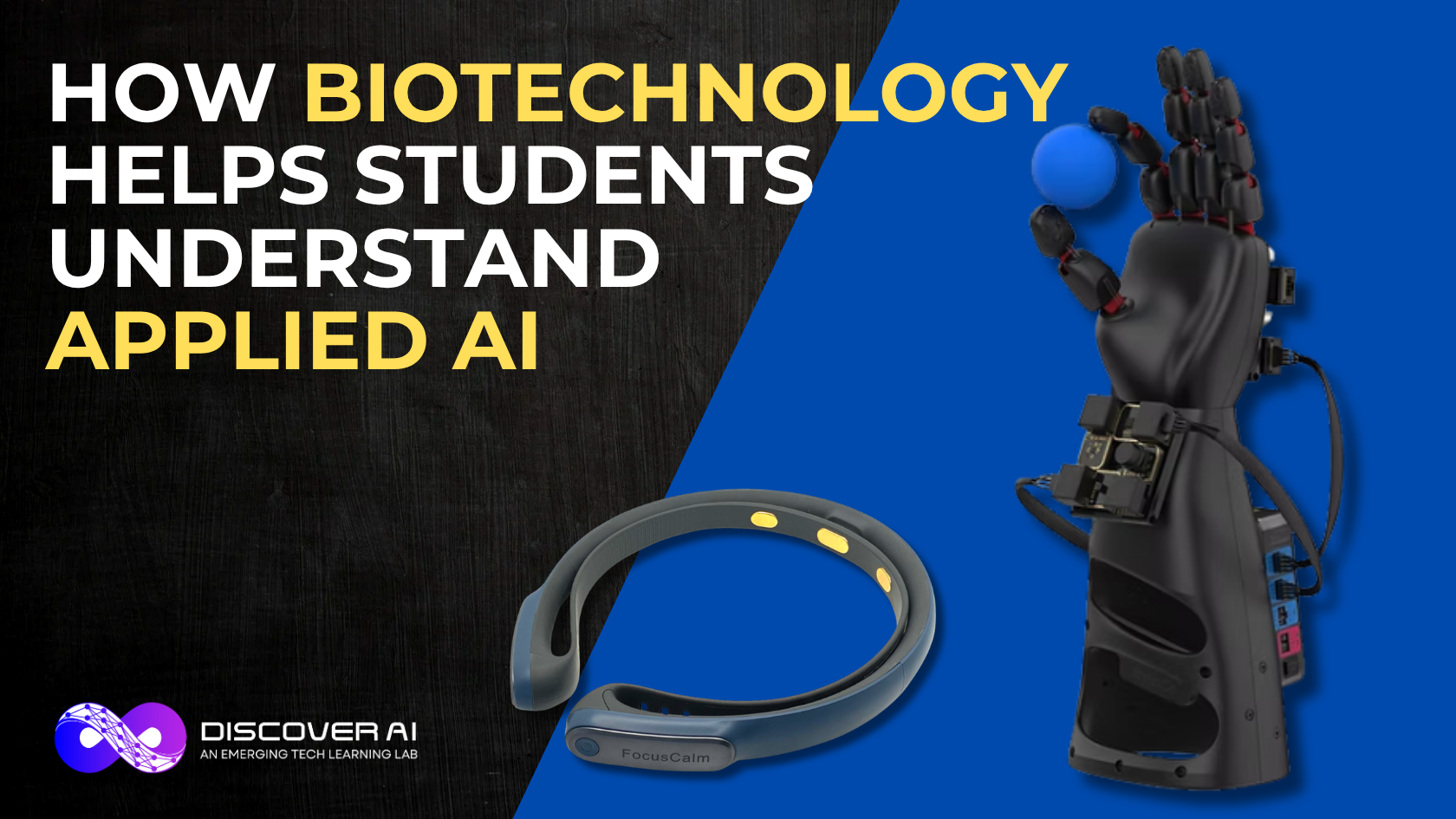
Healthcare may be the highest-stakes proving ground for artificial intelligence. AI is already being used to help researchers analyze massive
A two-part webinar series designed to help you discover new funding opportunities, build meaningful community partnerships, and create a strategy for turning big ideas into reality.