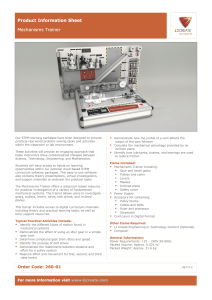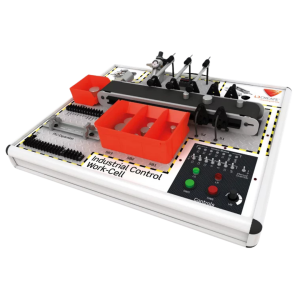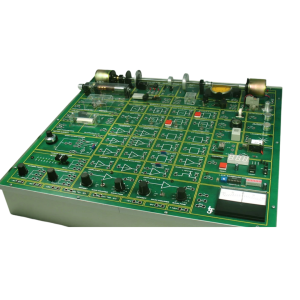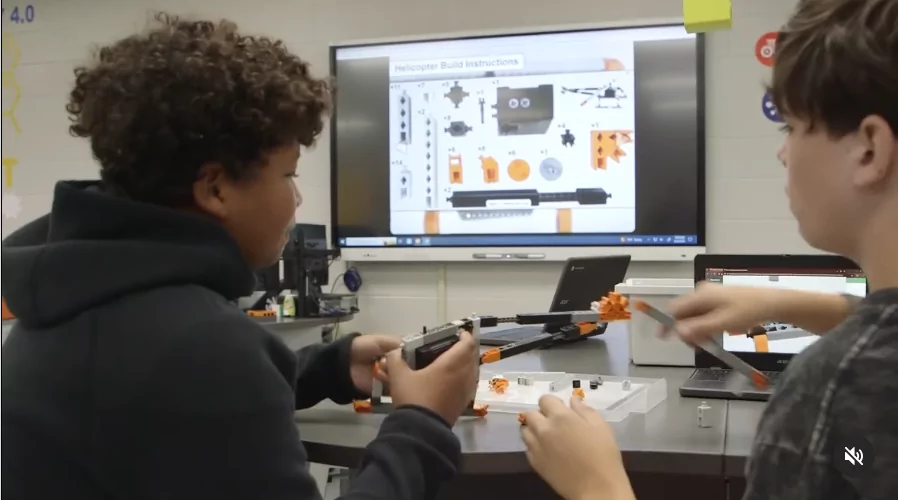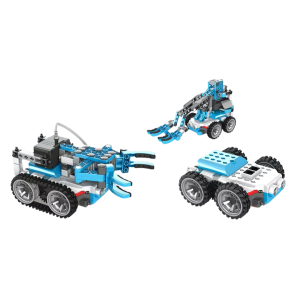
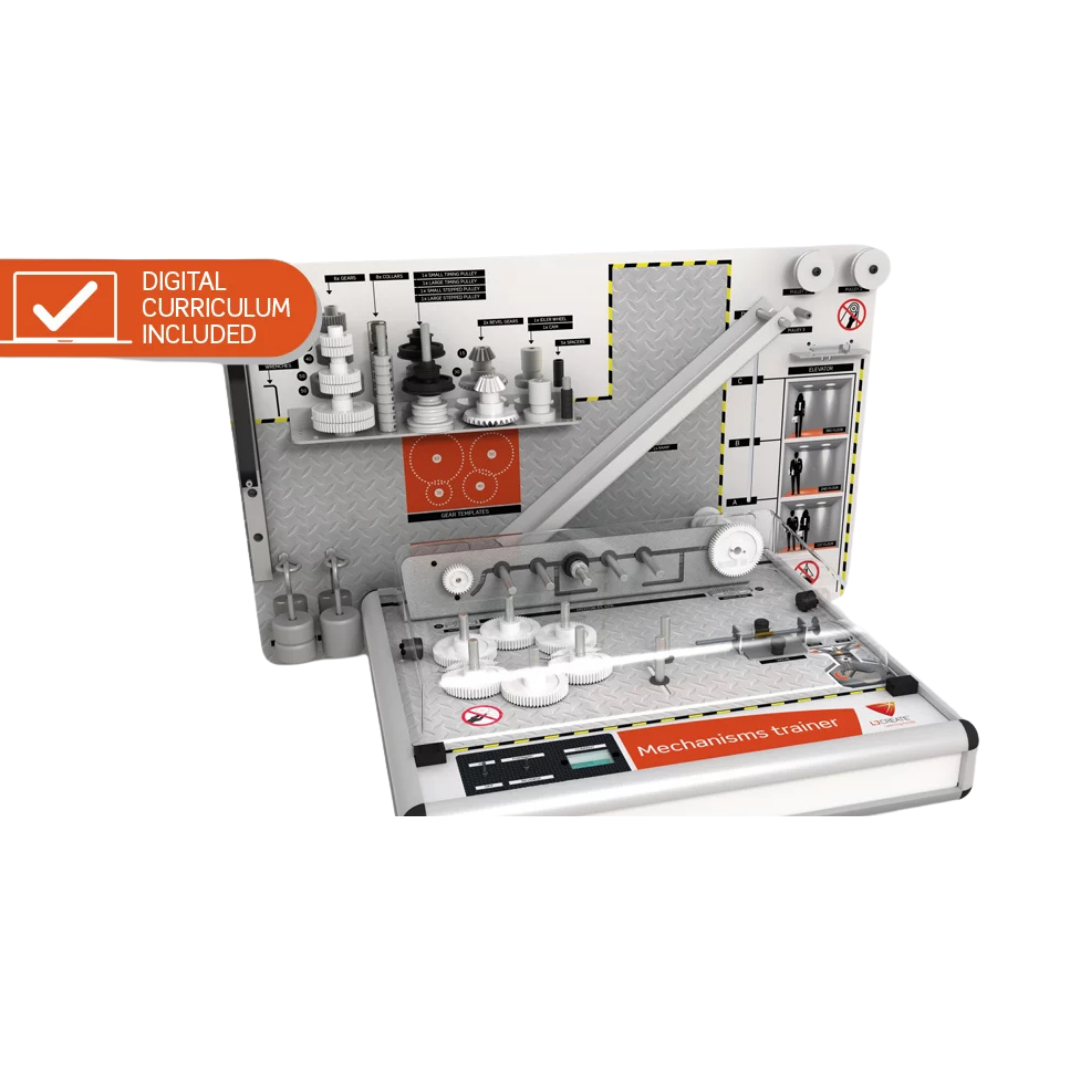
The Mechanisms Trainer (260-01) teaches students mechanical systems and motion control concepts used throughout engineering and manufacturing industries. Using real mechanical components and interactive experiments, learners investigate how mechanisms convert, transfer, and control movement in machines and automated systems.
This trainer reinforces foundational mechanical engineering principles through practical application. Students gain experience analyzing mechanisms, understanding motion relationships, and developing problem-solving skills used in modern industrial environments.
Features
- Hands-on investigations connect theory to real-world mechanics
- Modular components support multiple engineering activities
- Visible motion systems make abstract concepts easier to understand
- Digital curriculum included for ready-to-teach lessons
- Flexible implementation for labs, stations, or full-class instruction
- Durable design built for repeated classroom use
Using the Mechanisms Trainer, students can develop skills in:
Mechanical Motion and Power Transmission
Understand how mechanisms transfer and control movement within machines and industrial systems.
Mechanical Components and Systems
Identify and analyze gears, linkages, cams, pulleys, and other mechanical devices.
Engineering System Analysis
Explore how force, motion, and mechanical relationships impact system performance.
Problem Solving and Mechanical Design
Apply engineering thinking to evaluate and improve mechanical systems.
Mechanical Troubleshooting and Diagnostics
Develop analytical skills for identifying issues within mechanical systems and assemblies.
Curriculum & Program Integration
This trainer aligns with LJ Create’s Mechatronics program, where they’ve paired engaging curriculum and hands-on learning.
The curriculum for this learning system includes:
- Hands-on training experiments and activities
- Interactive online curriculum and instructional resources
- Teacher support materials and guided learning content
LJ Create trainers can be implemented as standalone learning systems or combined into larger pathway-based programs to support technical education initiatives.
Mechanisms Trainer (260-01) Product Details
System Includes
- Mechanical systems training platform
- Assorted mechanisms and motion components
- Gears, cams, pulleys, and linkage assemblies
- Mechanical construction and experimentation hardware
- Instructional materials and guided activities