How Biotechnology Helps Students Understand Applied AI
Healthcare may be the highest-stakes proving ground for artificial intelligence. AI is already being used to help researchers analyze massive

Rural America is home to thriving manufacturers and growing demand for technical talent. Yet access to career exposure and training often remains concentrated in larger metropolitan areas. The challenge for many communities is how to create greater awareness of those opportunities, provide ready access to training, and develop future talent without requiring people to leave the region.
Northeast Community College’s answer was to create a facility designed to serve an entire region.
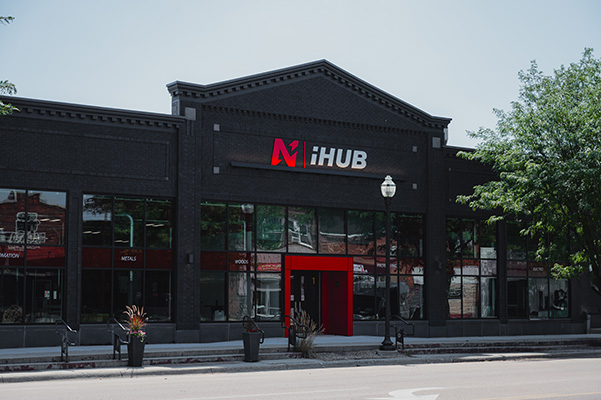
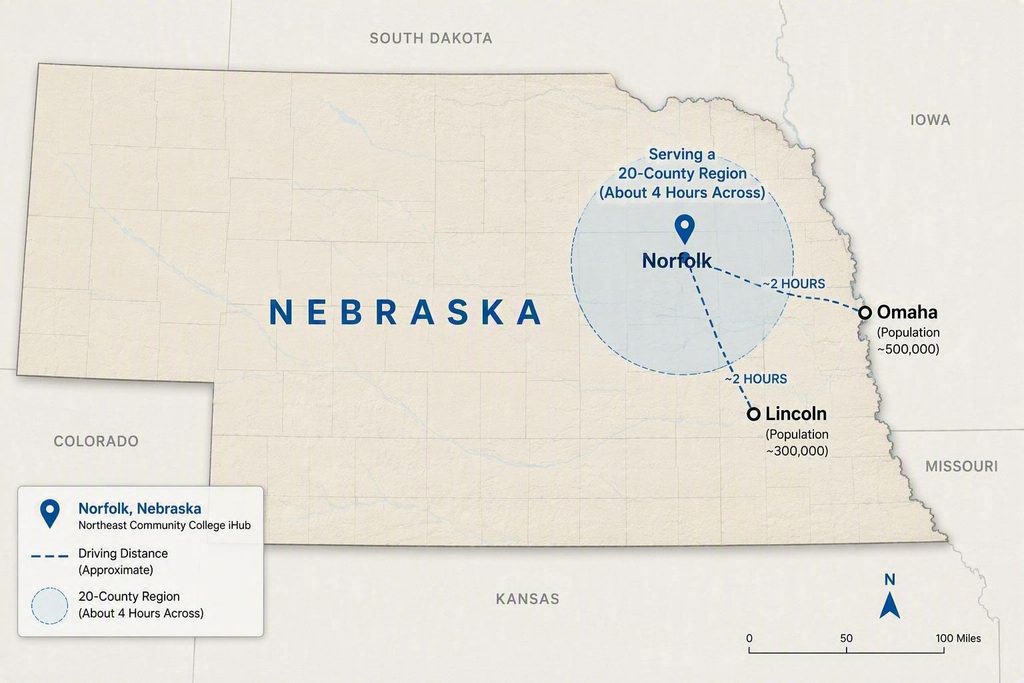
“The iHub is an 18,000 square foot facility based in downtown Norfolk, Nebraska,” said Erin Sharpe, director of iHub. “It is a facility for everybody.” Everybody, in this case, within a 20-county region in the northeast part of the state, with an audience spanning “K to gray.”
Serving that broad population means having a variety of programming and resources. The iHub brings together workforce development, youth robotics, entrepreneurship support, community fabrication, and advanced manufacturing training under one roof. The goal: to help address workforce needs while expanding access to technology and innovation throughout the area.
Northeast Nebraska may be rural, but it is also one of the state’s manufacturing powerhouses.
“We don’t have a ton of people, obviously, but per capita, we are the largest manufacturing region in the state of Nebraska,” Sharpe said. “It’s a really, really rich manufacturing industry.”
The challenge is geography.
Norfolk, with a population of about 24,000, sits roughly two hours from Nebraska’s largest metropolitan areas.
“Omaha and Lincoln are two big metros,” Sharpe explained. “They’re both two hours away from us, and so we pull in all this draw from all these rural communities. We serve a 20 county area that’s about four hours from one side of the region to the other.”
The region’s manufacturing base spans food production, steel processing, ethanol, packaging, dairy, agriculture, and numerous other sectors. These companies need technicians, maintenance specialists, automation professionals, and skilled workers who can adapt to rapidly evolving technologies. At the same time, community leaders have been grappling with a familiar rural concern: how to keep young people engaged, connected, and aware of opportunities available close to home.
The iHub traces its roots to a series of conversations between Northeast Community College and regional employers.
The effort accelerated after Dr. Leah Barrett became president of Northeast Community College and began bringing industry leaders together to discuss workforce needs.
“There was a lot of concerns going on, as everyone has, of class sizes getting smaller, not bigger, and how do we continue to feed the workforce,” Sharpe said.
At the same time, Nebraska was examining broader questions around workforce development, rural vitality, automation, and economic growth. Those discussions helped position the region to participate in a federally funded initiative through the Economic Development Administration’s Build Back Better program. The Heartland Robotics Cluster, led by Invest Nebraska, received a $25 million award that was distributed among seven partners statewide, including Northeast Community College.
The iHub project ultimately totaled approximately $8.5 million. About $5 million came from the EDA grant, approximately $750,000 came from a congressional earmark secured with support from Congressman Mike Flood, and more than $2 million was raised from manufacturers and local businesses.
But industry’s role extended well beyond financial support.
“We would meet quarterly with a very large group, talk about everything from floor plans with the architects to what was our plan with equipment and everything in between,” Sharpe said. “We would actually bring in spec sheets of equipment, go over what they liked, what they didn’t like.”
That collaboration continues today.
“We’re really relying on industry to tell us what do they need for the next generation to be successful,” she said.
The iHub combines several functions that are often housed in separate facilities.
Its community fabrication areas include woodworking and metalworking equipment ranging from hobbyist-level tools to industrial machinery. Users can access router tables, CNC equipment, welding stations, lathes, mills, laser engravers, 3D printers, and rapid prototyping technologies. Memberships allow community members, students, entrepreneurs, and makers to utilize the space.
The facility also supports youth robotics programs ranging from FIRST LEGO League to VEX and FIRST Tech Challenge competition teams.
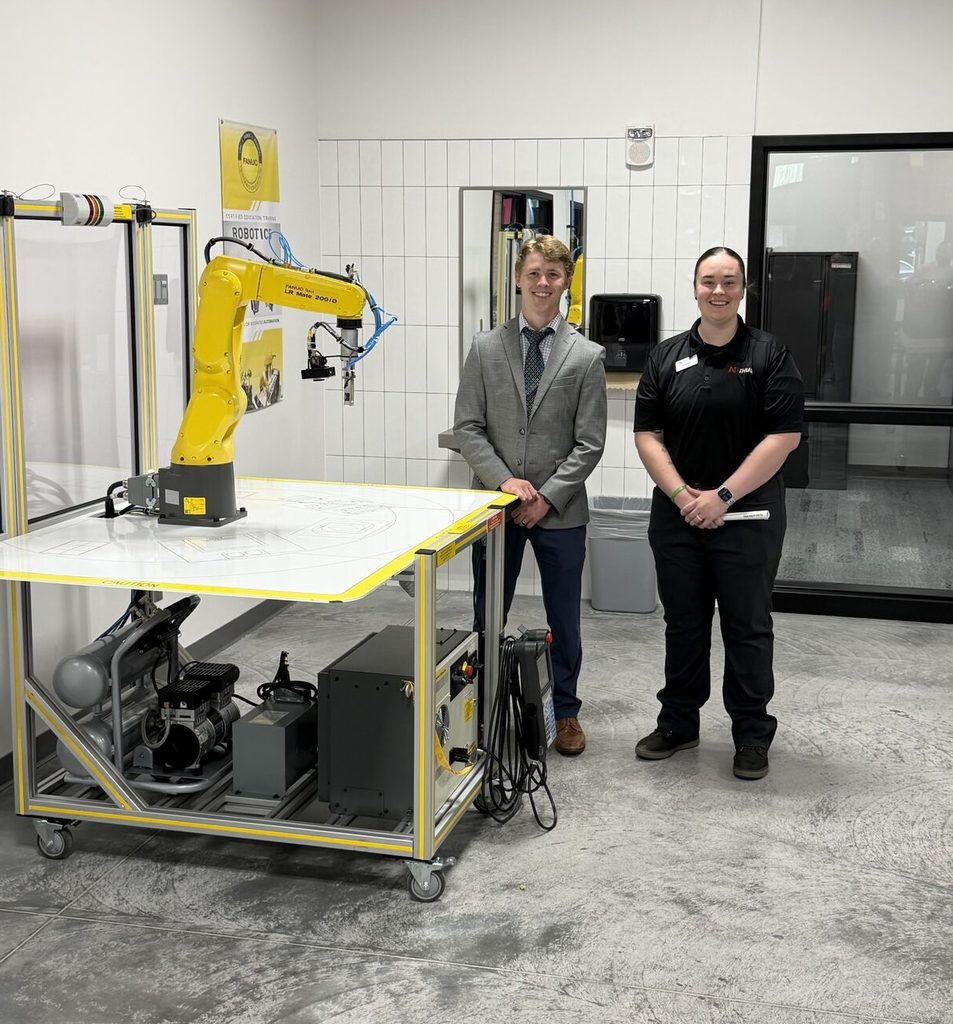
Just two weeks after opening, six robotics teams had already registered to use the facility as their practice space. The iHub also maintains robotics equipment for schools and organizations that may not yet have their own resources.
On the workforce development side, the facility includes dedicated industrial automation and electromechanical training labs.
“Our industrial automation lab is huge for us,” Sharpe said. “That’s where we do our certification in robotics, as well as we have a lot of Industry 4.0 equipment.”
The robotics and automation training environment includes FANUC industrial robotics technology supplied by Mission Learning Systems, alongside vision systems, sensors, PLC training, electromechanical systems, and other equipment used to prepare learners and incumbent workers for modern manufacturing environments.
Although the facility has only recently opened, Northeast has already seen substantial engagement through programs developed before the building was completed.
In 2025 alone, the organization interacted with 939 K-12 students through camps, workshops, and hands-on experiences across 28 events in five locations. During the same period, 83 incumbent workers earned certifications through Northeast’s programs.
Looking ahead, the college anticipates reaching approximately 75 community memberships by 2027.
For Sharpe, however, the most important measures of success may not be reflected in enrollment reports or membership statistics.
“It’s getting the community, both students and the adults that are important in those students’ lives, parents, grandparents, uncles, whatever, to see STEM careers, see these manufacturing careers that are so rich in our community as really viable paths,” she said. “If we can change that mindset a little bit the next few years, that’s an extreme success for us.”
That goal may ultimately be what makes the iHub noteworthy beyond Northeast Nebraska. The facility is not simply a robotics lab, a makerspace, or a workforce training center. It is an attempt to connect education, industry, entrepreneurship, and community engagement in a region where access to those opportunities has historically been spread across great distances. For Northeast Community College and its partners, the building itself is only the beginning.
Healthcare may be the highest-stakes proving ground for artificial intelligence. AI is already being used to help researchers analyze massive

A two-part webinar series designed to help you discover new funding opportunities, build meaningful community partnerships, and create a strategy for turning big ideas into reality.
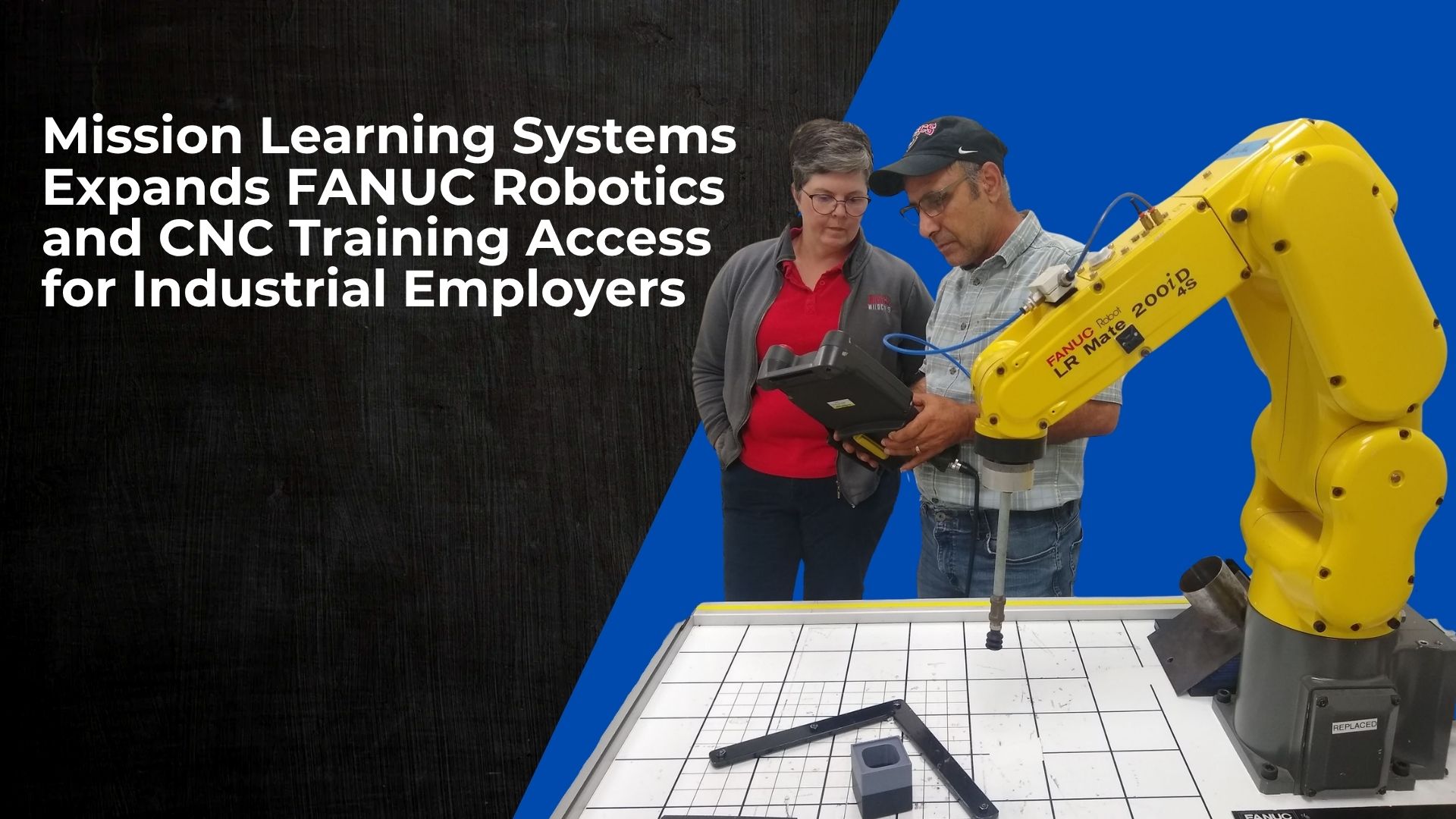
New workforce training solutions enable manufacturers to build FANUC robotics and CNC skills in-house.