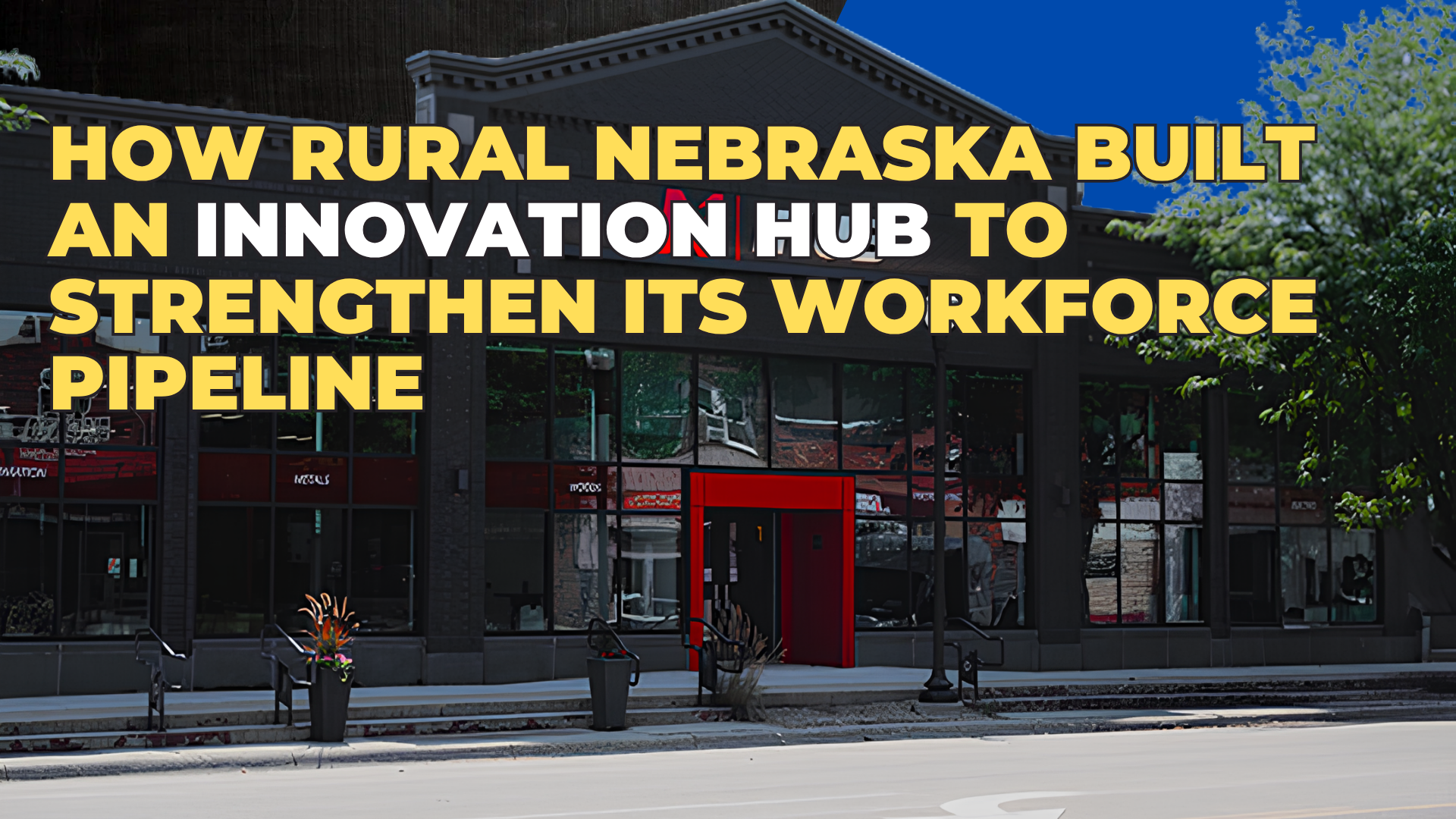
How Rural Nebraska Built an Innovation Hub to Strengthen Its Workforce Pipeline
Rural America is home to thriving manufacturers and growing demand for technical talent. Yet access to career exposure and training

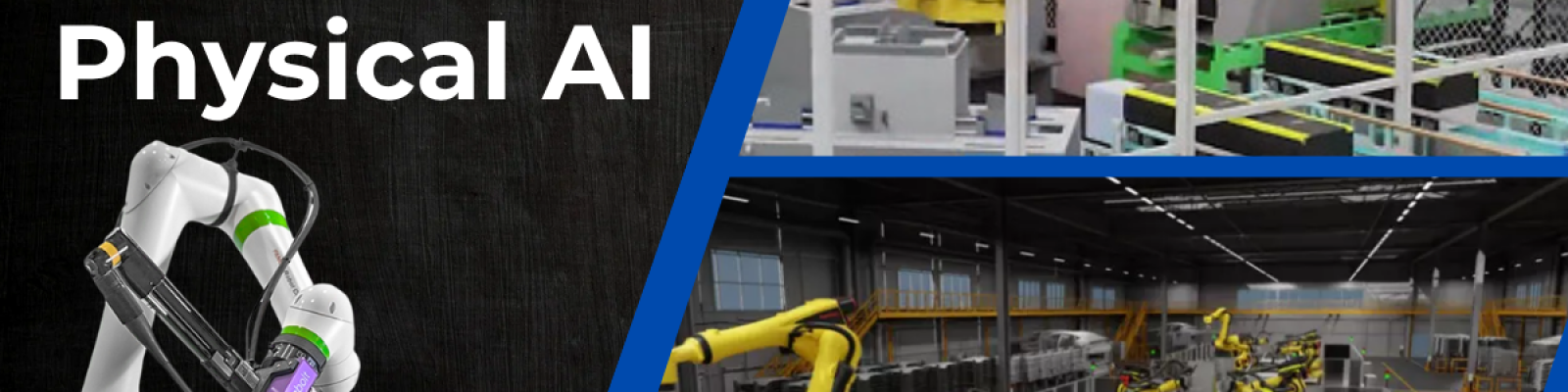
Industrial robots are now a baseline technology across the modern economy. Yes, they power manufacturing, but they’re also common in packaging and fulfillment, food and beverage, electronics, medical devices, plastics, warehousing, and other operations where speed, consistency, traceability, and precision matter.
That’s good news for students. Robotics is one of the clearest ways to make applied AI tangible: a robot cell is a system that senses its environment, makes decisions under safety constraints, and executes actions with repeatable precision—often supported by simulation, machine vision, integrated safety, networking, and continuous improvement. So why FANUC? It’s the robot platform students are most likely to encounter in the workforce, and the CERT ecosystem makes it teachable in a structured, industry-aligned way.
FANUC – the world’s leading industrial robotics company – just announced a partnership with NVIDIA to advance physical AI. Physical (or Applied) AI brings artificial intelligence into the real world, and in this case, it’s enabling robots to see, reason and act in dynamic environments.

Under this collaboration, FANUC will leverage NVIDIA AI infrastructure, including NVIDIA Jetson edge modules, cloud/edge AI infrastructure, NVIDIA Isaac Sim open robotic simulation framework and NVIDIA Omniverse libraries, within its extensive robot portfolio and ROBOGUIDE simulation software. This approach empowers manufacturers to create photorealistic digital twins of their factories, train robots virtually, and deploy them with unprecedented speed and flexibility.
Key Highlights of FANUC’s Physical AI Strategy:
These advancements into physical AI are yet another reason educators should embrace the FANUC robotics platform to prepare students for industrial automation.
All applied AI systems have their foundation in the Edge-to-Cloud continuum, which explains how the layers of hardware, software, and machine learning are all connected.

At the edge, you have the robot and workcell: the mechanical arm itself, EOAT, safety devices, and fixtures. “Sensors” in robotics include both physical sensing (vision, safety scanners, etc.) and the signals that describe the workcell state (part present, gripper open/closed, pallet full, interlocks, etc.).
A clean education example is integrated safety. A FANUC fenceless CERT cart combines FANUC DCS Position and Speed Check with an Allen-Bradley SafeZone Mini safety laser scanner, expanding the work envelope while introducing students to modern integrated safety practice. Optional configurations include robot-mounted 2D iRVision and lighting.
The control system on the robot is a combination of the controller and the teach pendant. This is where students can interact with the system and perform actions in real-time: jogging, motion instructions, frames, termination types, I/O logic, macros, and safe recovery procedures.
Transmission & Fog is how robot status and cell signals move over industrial networks—often through Ethernet-based industrial protocols—and upstream to other systems.
ROBOGUIDE software provides a virtual simulation for testing and analysis of robot programs. With the new NVIDIA physical AI enablement, testing and deployment will more accurately reflect robot operations in the real world.
Intelligent software like MT-LINKi and others enable data acquisition and analysis, helping the automation cell become more efficient over time.
A strong industrial robotics pathway produces students who can operate and program a workcell with precision and discipline; safely, repeatably, and with an understanding of how the system behaves when something goes wrong. In practice, that means competence in the fundamentals that drive real automation, including safe workcell procedures and Dual Check Safety (DCS); powering up and operating correctly; confident iPendant navigation and jogging; and the core mechanics of robot programming (frames, motion types and terminations, and clean program structure). From there, students move into the layer that separates “robot motion” from real automation: file management and backups, fault diagnosis and recovery, and workcell logic through I/O, macros, registers, and branching instructions.
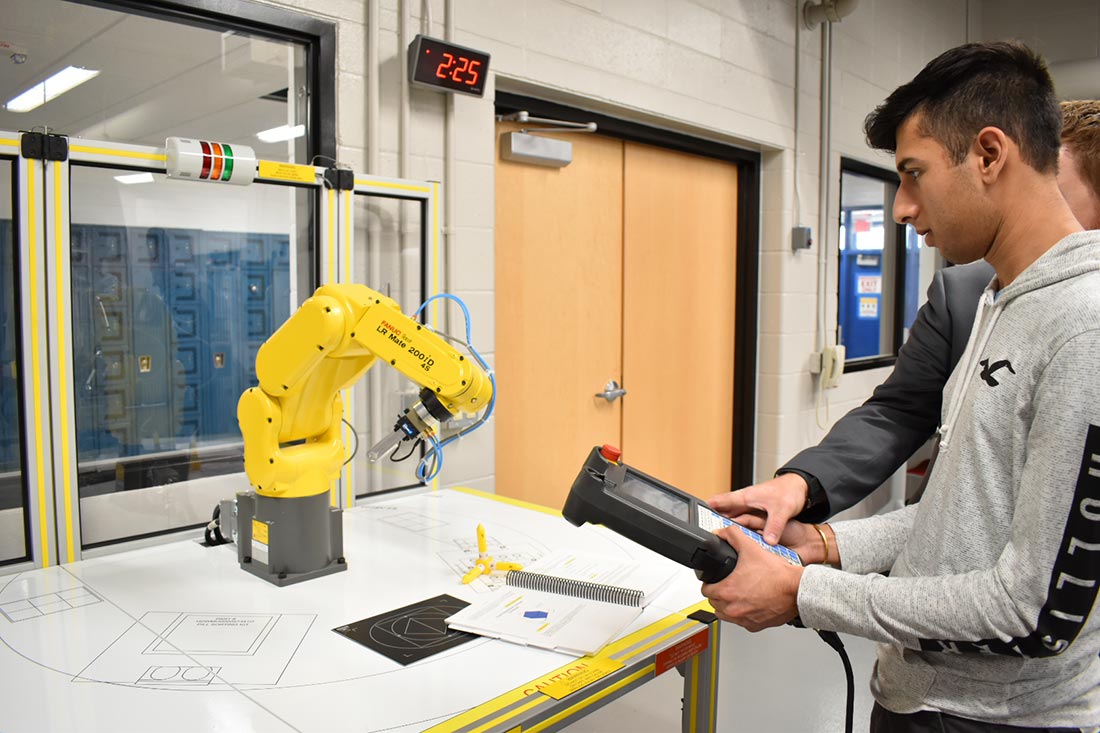
Within Discover AI, this is delivered as a structured progression built on the FANUC CERT ecosystem, culminating in applied material-handling projects that require students to build and document a complete automated routine, including integrating frames, I/O interlocks, safe operation practices, and recoverable program logic the way an integrator would. Simulation is woven in as a parallel workflow through ROBOGUIDE, from validating paths and sequences virtually to reducing risk before running live.
FANUC’s recent “Physical AI” direction with NVIDIA is a useful signal about where the industry is heading – more simulation-first workflows, more open platforms, and more distributed compute across the edge-to-cloud continuum – but the educational value here is already clear: students learn to think in systems, not isolated robot moves, and that foundation transfers directly into vision, advanced sensing, and optimization as they progress.
To learn more about Industrial Robotics and Discover AI.
Rural America is home to thriving manufacturers and growing demand for technical talent. Yet access to career exposure and training
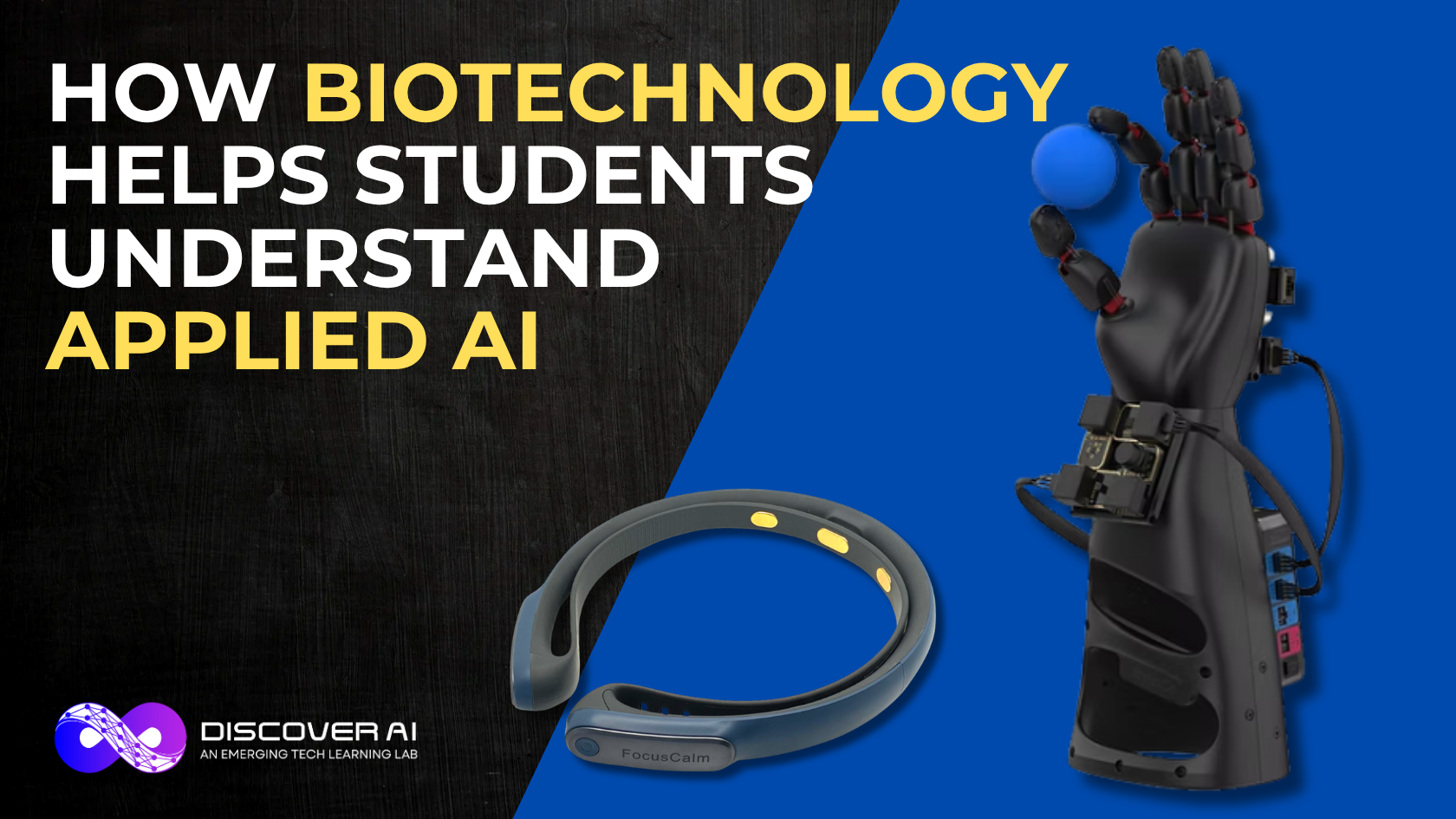
Healthcare may be the highest-stakes proving ground for artificial intelligence. AI is already being used to help researchers analyze massive
A two-part webinar series designed to help you discover new funding opportunities, build meaningful community partnerships, and create a strategy for turning big ideas into reality.