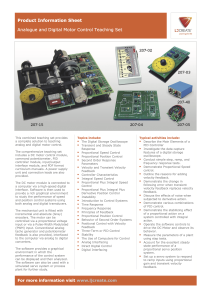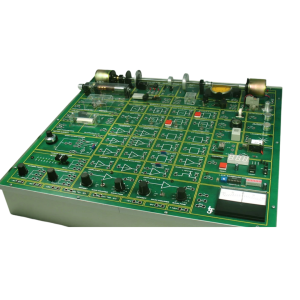
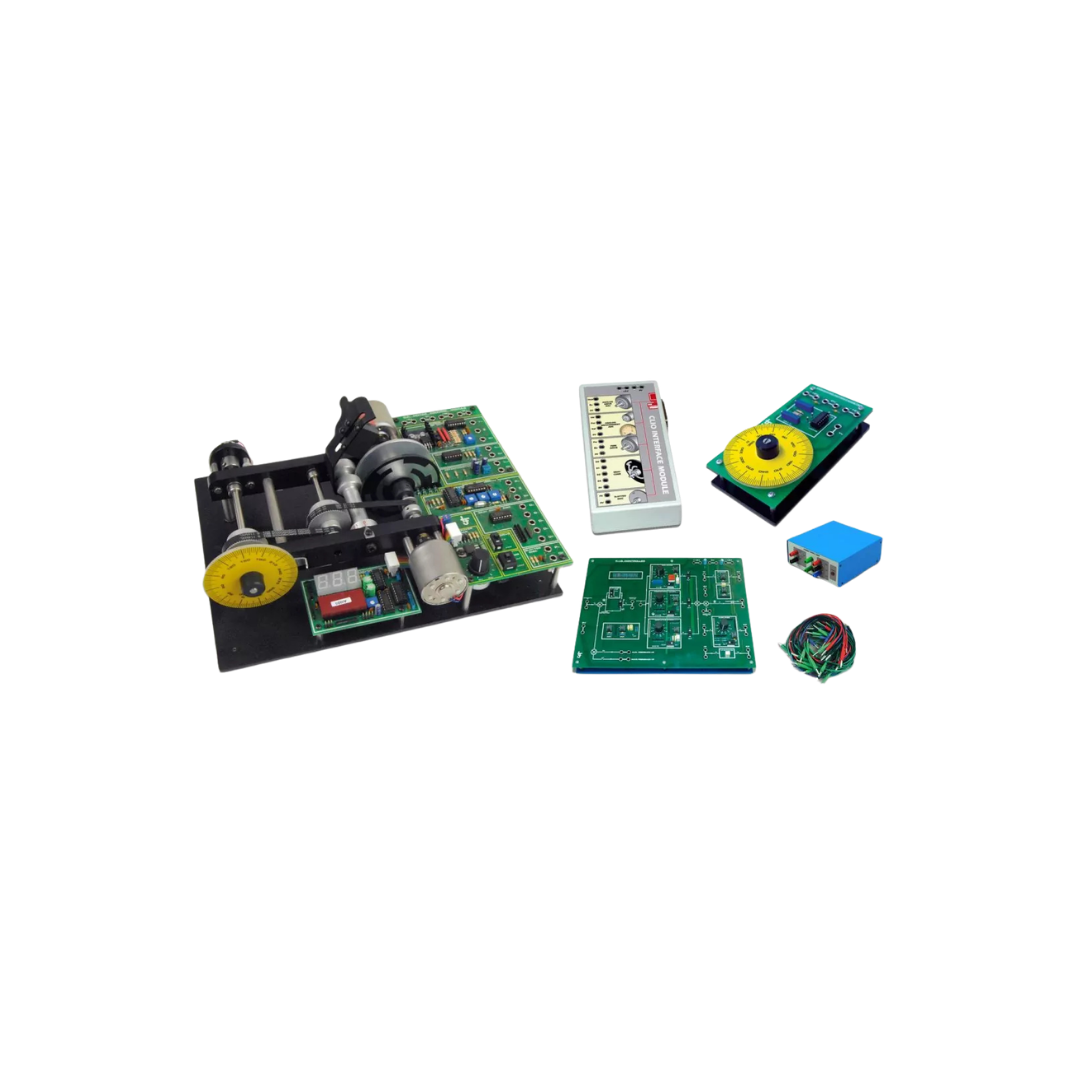
The Analog and Digital Motor Control learning system (207-00) provides students with a comprehensive introduction to control systems engineering through hands-on investigations of DC motor control and feedback systems. Using both analog and digital control methods, learners explore how speed, position, and system stability are managed in modern automation and industrial environments.
This trainer combines real hardware with graphical software tools to visualize system performance and analyze control behavior. Students gain practical experience with PID control, system response, and digital interfacing while developing skills used throughout robotics and automation industries.
Features
- Real DC motor system demonstrates control principles.
- Graphical software tools visualize system performance.
- Incremental and absolute encoders reinforce feedback concepts.
- PID control experiments support advanced learning.
- Digital interfacing introduces modern automation systems.
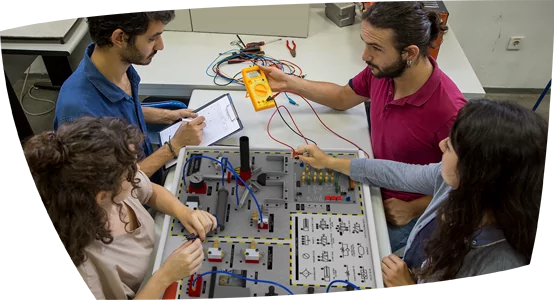
- Hands-on investigations build analytical skills.
Using the Analog and Digital Motor Control Teaching Set, students can develop skills in:
Motor Control Systems
Understand how speed and position are controlled in electromechanical systems.
PID Control
Investigate proportional, integral, and derivative control methods.
Feedback Systems
Explore how sensors and encoders provide system feedback.
System Response Analysis
Analyze transient, steady-state, time, and frequency response.
Digital and Analog Interfacing
Learn how computers communicate with control systems.
Control System Stability
Evaluate how different control strategies affect system performance.
Curriculum & Program Integration
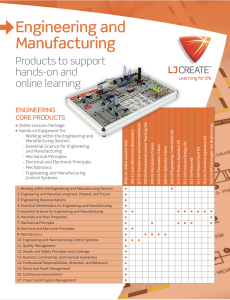
This trainer aligns with LJ Create’s Mechatronics and Engineering programs, where they’ve paired engaging curriculum and hands-on learning.
The curriculum for this learning system includes:
- Hands-on training experiments and activities
- Interactive online curriculum and instructional resources
- Teacher support materials and guided learning content
LJ Create trainers can be implemented as standalone learning systems or combined into larger pathway-based programs to support technical education initiatives.
Analogue and Digital Motor Control Teaching Set (207-00) Product Details
System Includes:
- DC motor control module (207-15)
- Command potentiometer module (207-03)
- PID controller module (207-04)
- Input/output interface module (207-02)
- Power supply (207-40)
- Connection lead set (207-05)
- Curriculum manuals in PDF format
Control System Features:
- DC motor with speed and position control
- Incremental encoder feedback
- Absolute (Gray) encoder feedback
- PWM (Pulse Width Modulation) control
- Analog tachogenerator feedback
- Potentiometer position feedback
- Analog-to-digital computer interface
Software Capabilities:
- Graphical visualization of control system performance
- Data capture and analysis tools
- Servo system simulation
- Process plant simulation
- System parameter measurement
- Step, ramp, and frequency response testing
Requirements:
- Computer with USB connectivity
Technical Specifications:
- Power Requirements: 110–240 V, 50–60 Hz
- Includes software and curriculum resources