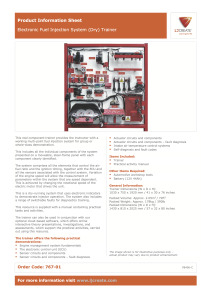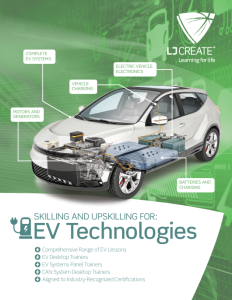
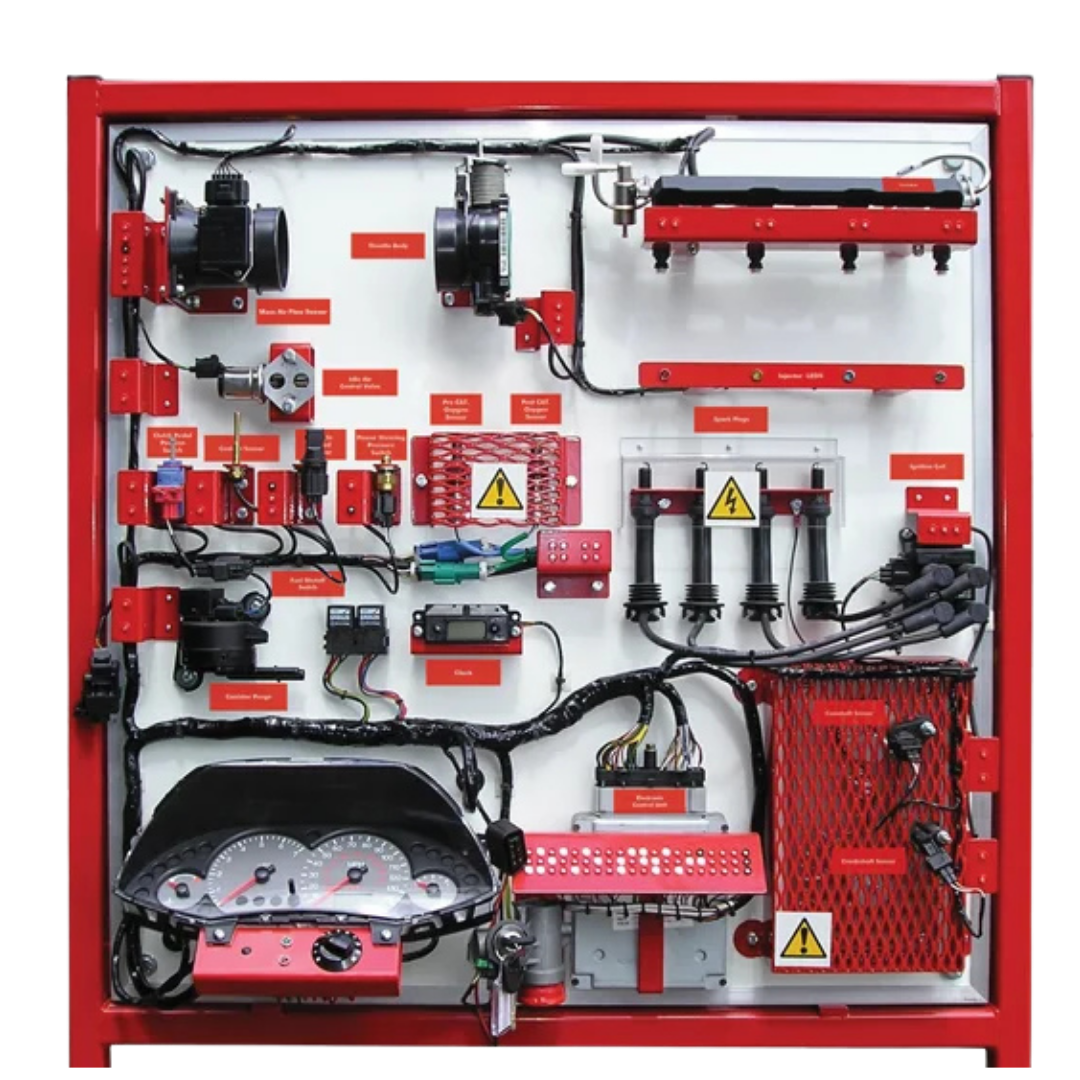
The Automotive Electronic Fuel Injection System (Dry) Trainer (767-01) from LJ Create provides a working multi-point fuel injection system for group or whole-class demonstrations. Individual components are clearly identified and mounted on a movable steel-frame panel, giving students accessible exposure to the components and electronic controls involved in automotive engine management.
The system incorporates the ECU, sensors, actuators, and other elements responsible for controlling air-fuel ratio and ignition timing. Instructors can vary simulated engine speed to investigate speed-dependent parameters, while electronic indicators demonstrate injector operation without fuel. Switchable faults add practical diagnostic exercises covering sensor and actuator circuits, engine management, and electronic fault codes.
Features
- Working multi-point fuel injection system introduces modern automotive engine management.
- Dry-running design demonstrates fuel injection operation without using fuel.
- Real automotive components provide practical experience with ECU-controlled systems.
- Variable simulated engine speed allows investigation of speed-dependent system parameters.
- Electronic injector indicators visually demonstrate injector operation.
- Clearly identified sensors and actuators make system inputs and outputs easier to investigate.
- Switchable faults provide repeatable automotive diagnostic exercises.
Engine Management Fundamentals
Investigate the fundamentals and operation of an automotive engine management system.
Electronic Control Unit (ECU)
Explore the role of the ECU in monitoring and controlling the electronic fuel injection system.
Sensor Circuits & Components
Identify and investigate the sensors and electrical circuits associated with engine management.
Sensor Fault Diagnosis
Diagnose simulated faults within automotive sensor circuits and components.
Actuator Circuits & Components
Investigate actuator circuits and components controlled by the engine management system.
Actuator Fault Diagnosis
Develop troubleshooting skills by diagnosing simulated actuator circuit and component faults.
Intake Air Temperature Control
Investigate intake air temperature control systems and their role within engine management.
Self-Diagnosis & Fault Codes
Explore automotive self-diagnostic capabilities and use system fault codes to support troubleshooting.
Curriculum & Program Integration
This automotive trainer includes practical tasks and activities for students and can be used alongside LJ Create’s cloud-based software.
LJ Create’s Cloud-Based Software
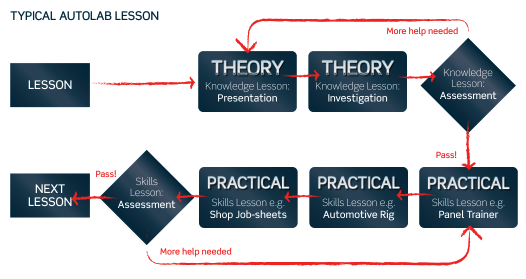
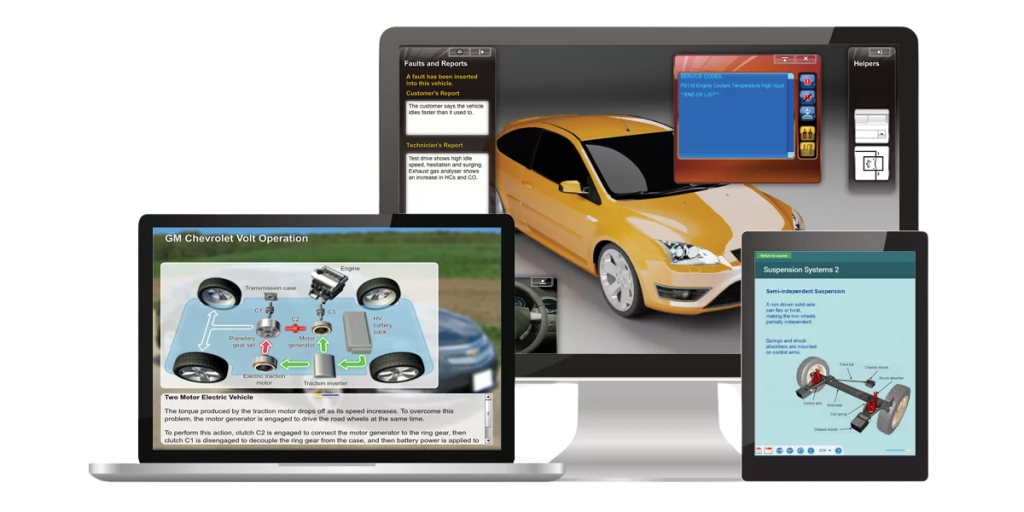
LJ Create’s optional cloud-based software extends hands-on learning with interactive theory presentations, practical tasks, investigations, and assessments. Digital content connects to activities performed on the training equipment, helping instructors blend online instruction with practical automotive skill development.
Automotive Electronic Fuel Injection System (Dry) Trainer (767-01) Product Details
This automotive fuel injection trainer features:
- Working multi-point electronic fuel injection system
- Electronic Control Unit (ECU)
- Engine management sensors
- Engine management actuators
- Air-fuel ratio control
- Ignition timing control
- Variable simulated engine speed
- Electric motor-driven system
- Electronic indicators for injector operation
- Dry-running operation without fuel
- Switchable diagnostic faults
- Clearly identified real components
- Movable steel-frame panel
- Suitable for group or whole-class demonstrations
- Practical Demonstrations
- Engine management system fundamentals
- Electronic Control Unit (ECU)
- Sensor circuits and components
- Sensor circuit and component fault diagnosis
- Actuator circuits and components
- Actuator circuit and component fault diagnosis
- Intake air temperature control systems
- Self-diagnosis and fault codes
System Includes
- Automotive Electronic Fuel Injection System (Dry) Trainer
- Practical activity manual
Requirements
- Automotive workshop tools
- 12V, 44Ah battery
Technical Specifications
- Trainer Dimensions: 41 × 30 × 76 in (W × D × H)
- Battery Requirement: 12V, 44Ah