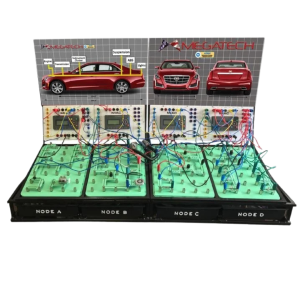
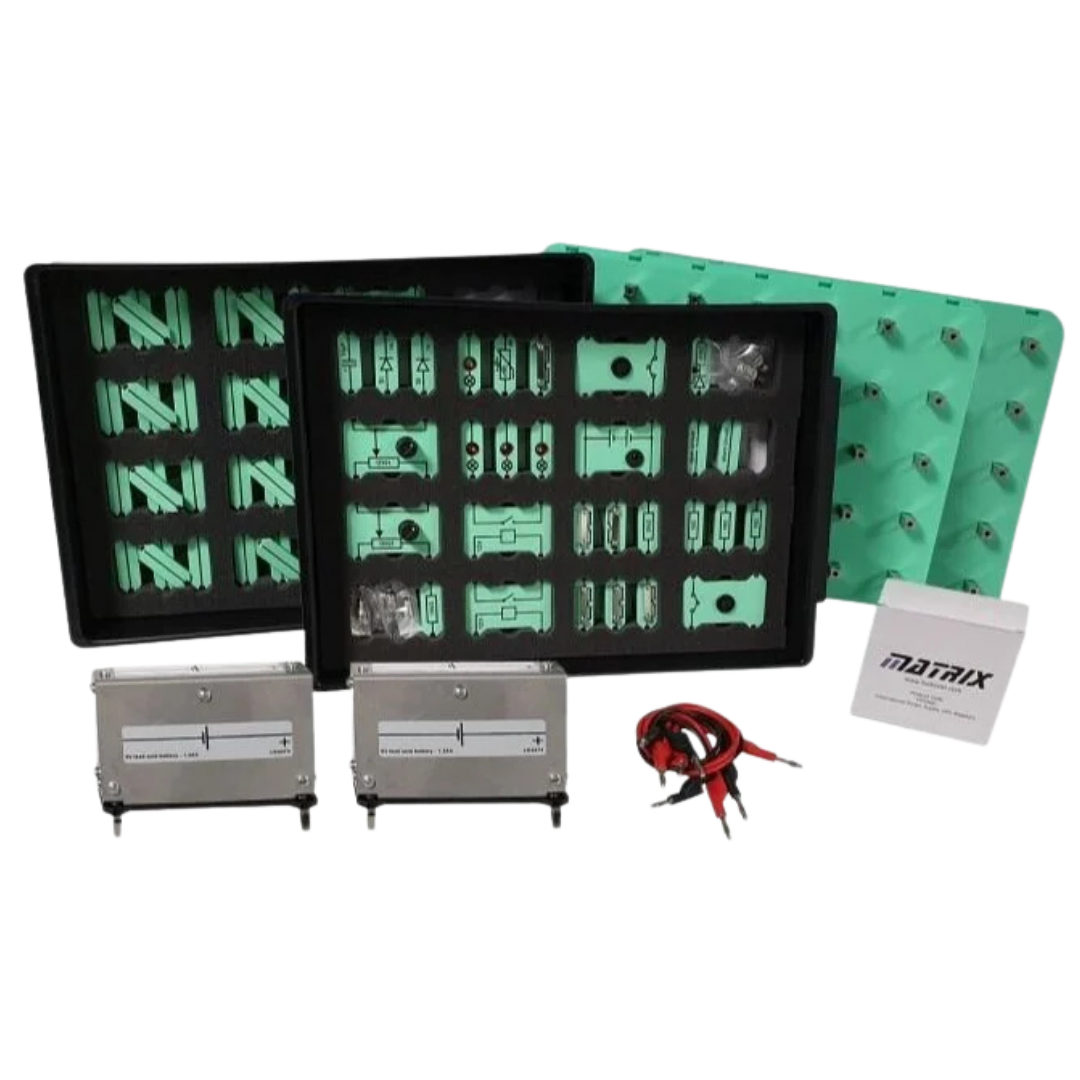
The Automotive Fault Finding trainer builds essential diagnostic skills through practical, hands-on fault-finding exercises using real automotive components. Students learn systematic troubleshooting procedures across four comprehensive projects that cover the most common diagnostic scenarios in vehicle electrical systems. The trainer teaches proper measurement techniques for voltage, current, resistance, and capacitance—the fundamental electrical values needed for circuit diagnosis. Students practice testing individual components, including switches, bulbs, batteries, diodes, LED bulbs, resistors, potentiometers, thermistors, and relays, developing the ability to determine if components are functioning correctly or have failed. The curriculum specifically addresses open circuit faults (breaks in wiring or connections) and short circuit faults (unwanted current paths), teaching students to identify these common problems using systematic diagnostic approaches. By working through structured fault-finding projects, students develop the critical thinking and logical troubleshooting skills that separate effective automotive technicians from parts replacers.
Features
- Measuring voltage, current, resistance, and capacitance
- Component testing for switches and bulbs
- Battery testing and evaluation procedures
- Diode and LED bulb testing techniques
- Testing resistors, potentiometers, and thermistors
- Relay testing and diagnosis
- Open circuit fault identification and diagnosis
- Short circuit fault detection and troubleshooting
- Four comprehensive fault-finding projects
- Systematic troubleshooting methodology training
- Real automotive components for authentic learning
Fundamental Electrical Measurements
Performing accurate voltage, current, resistance, and capacitance measurements using multimeters and diagnostic equipment.
Component Testing Procedures
Testing switches, bulbs, batteries, diodes, LEDs, resistors, potentiometers, thermistors, and relays to determine proper function or failure.
Open Circuit Diagnosis
Identifying and locating open circuits caused by broken wires, corroded connections, or failed components using systematic testing.
Short Circuit Detection
Diagnosing short circuits that create unwanted current paths and cause fuse failures, component damage, or parasitic drains.
Systematic Troubleshooting
Developing logical, step-by-step diagnostic procedures that efficiently identify root causes rather than randomly replacing parts.
Automotive Fault Finding Trainer Product Details
System Includes:
- Voltage, current, resistance, and capacitance measurement training
- Switch and bulb testing procedures
- Battery testing techniques
- Diode and LED testing methods
- Resistor, potentiometer, and thermistor testing
- Relay testing and diagnosis
- Open circuit fault identification
- Short circuit fault detection
- Four comprehensive fault-finding projects