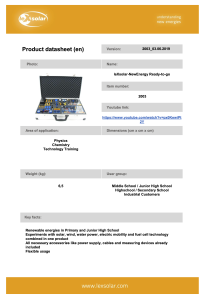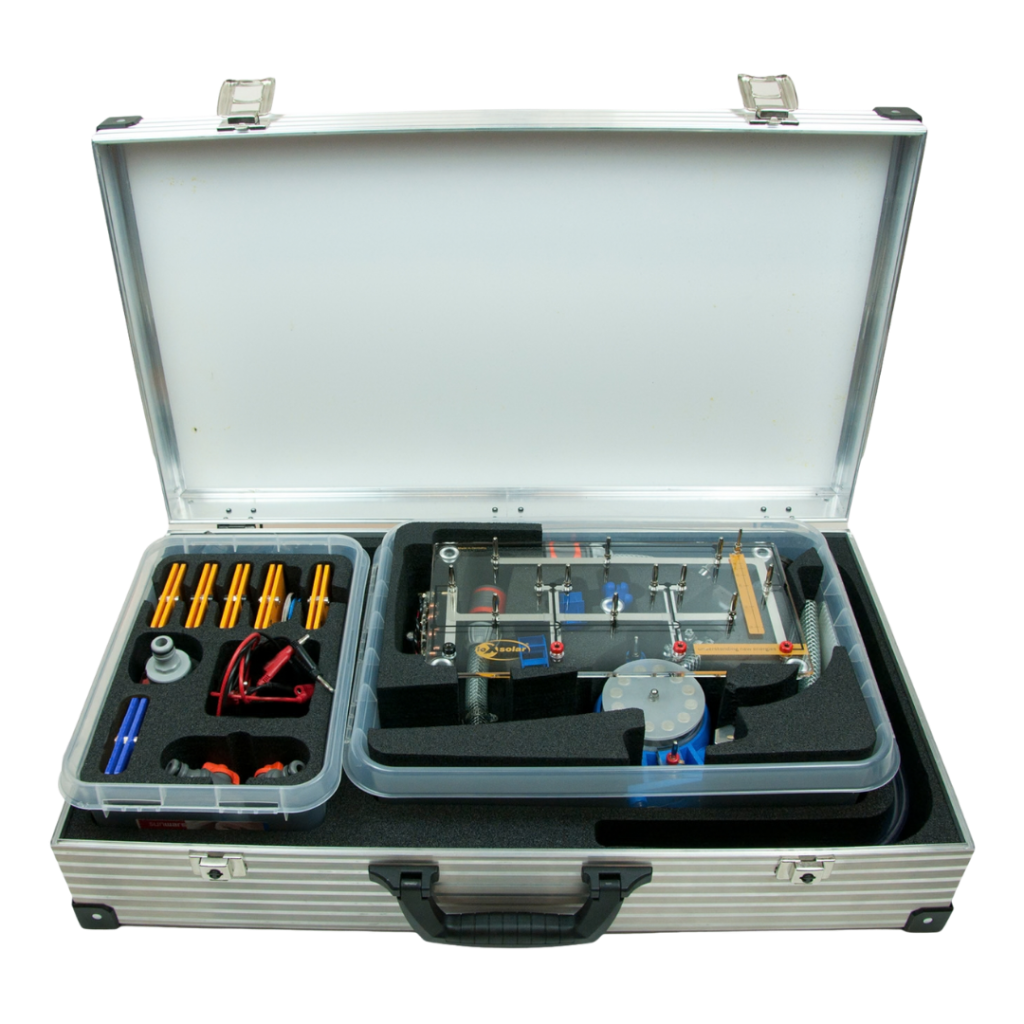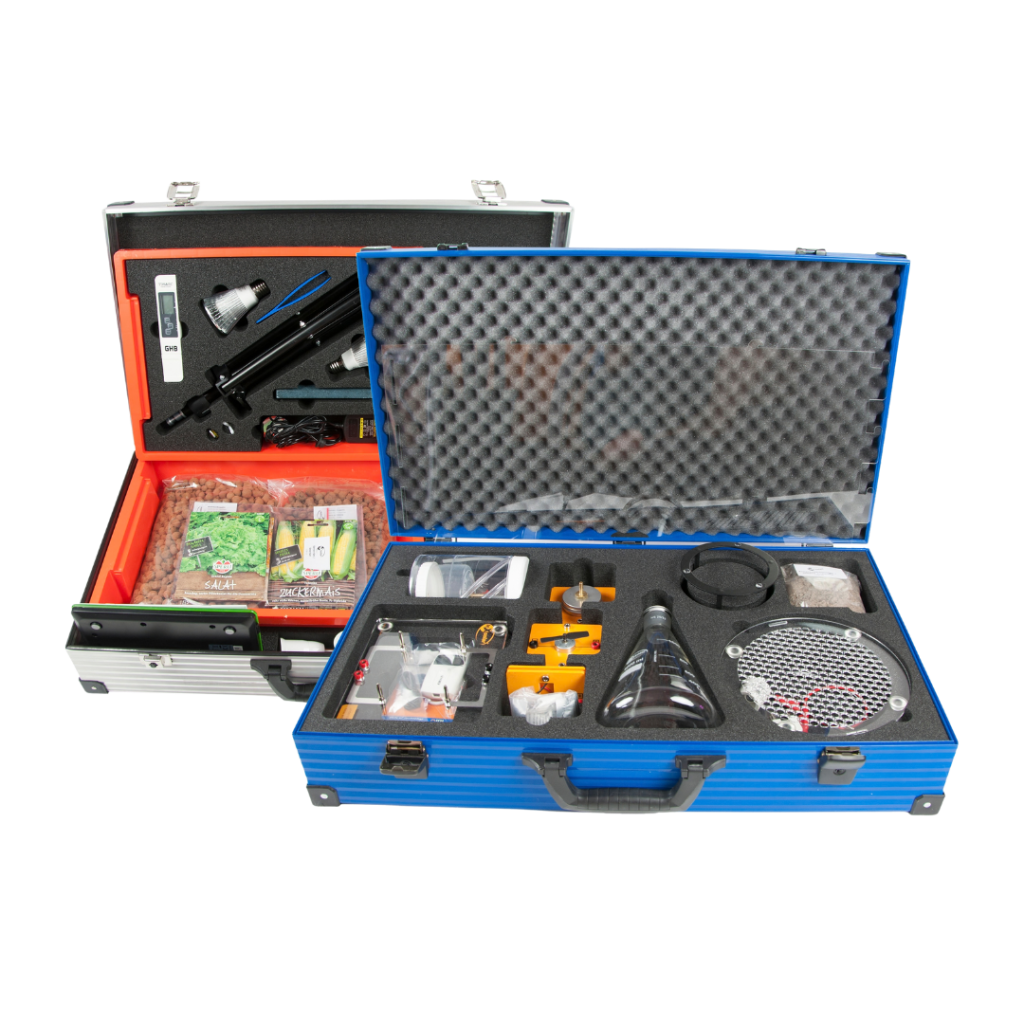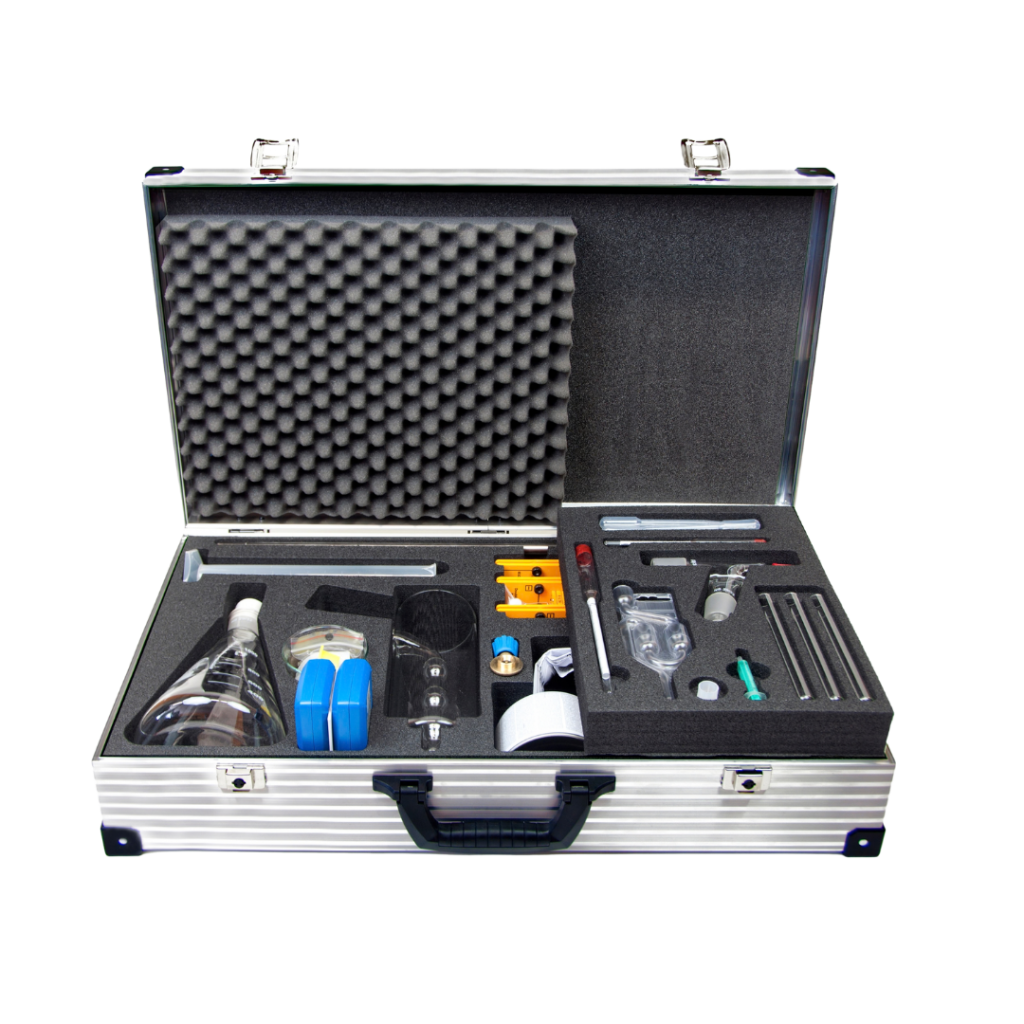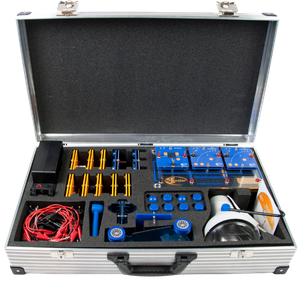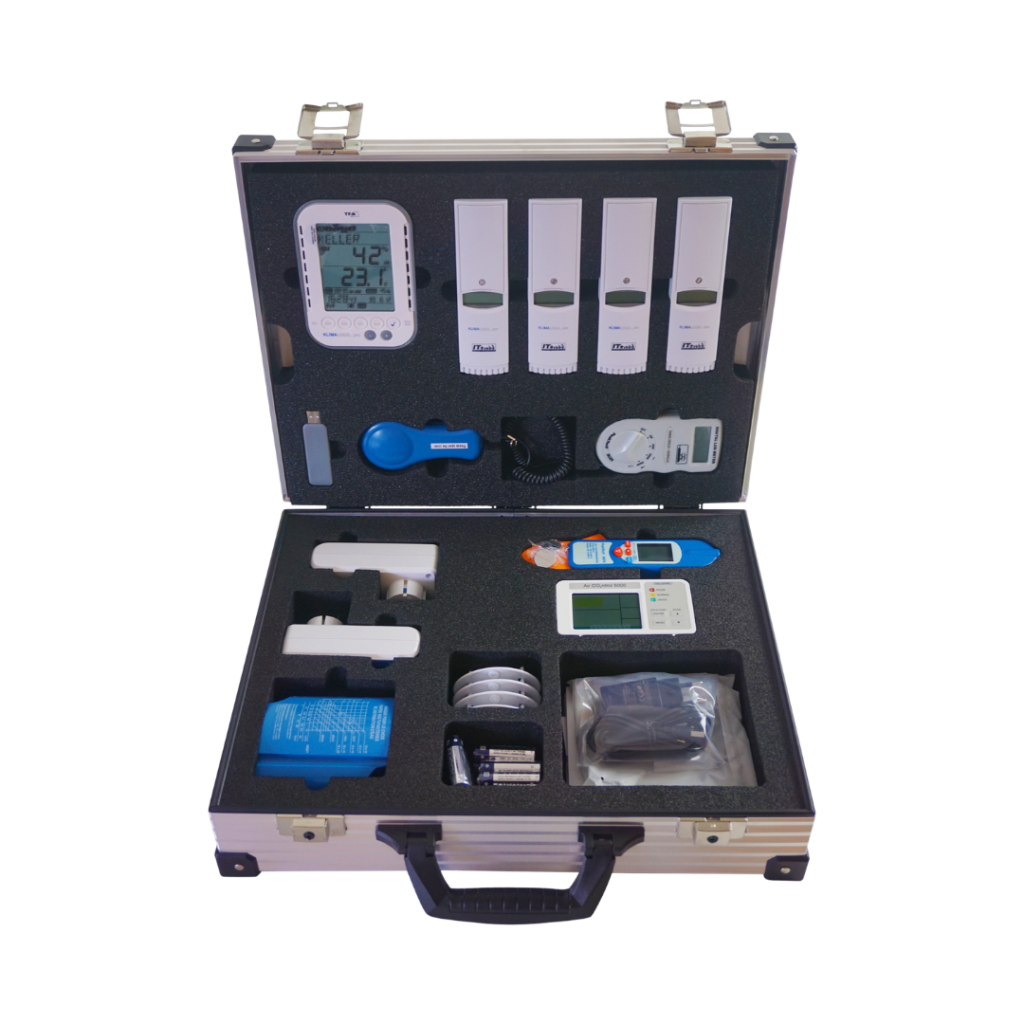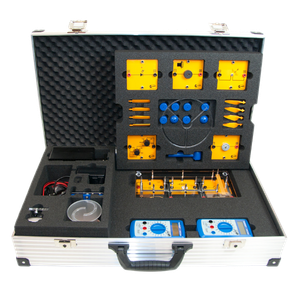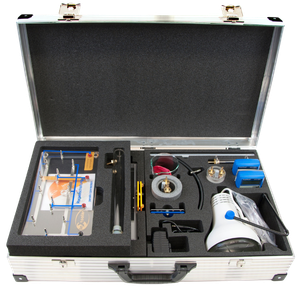
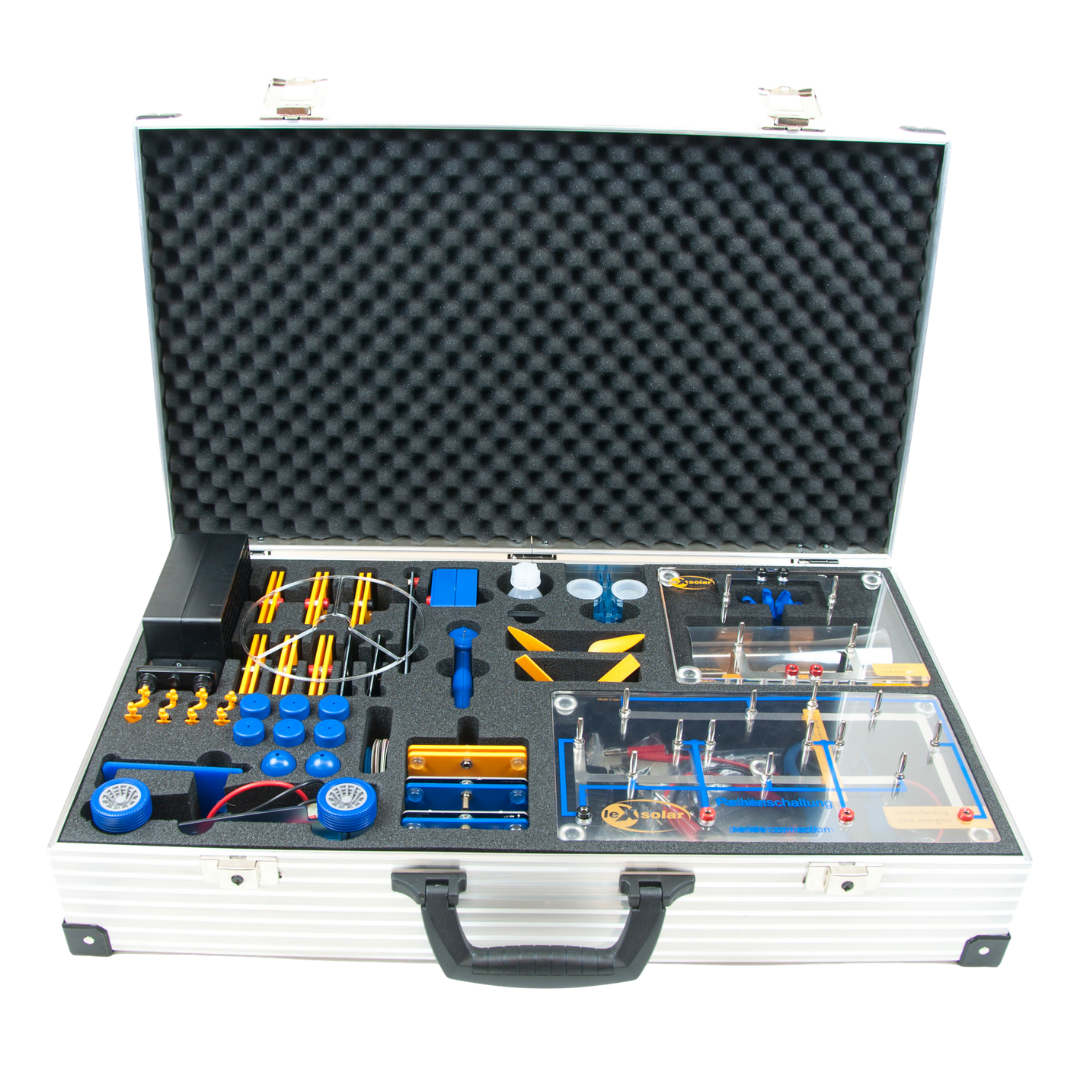
Renewable energy systems use a variety of technologies to capture, convert, store, and use energy. The NewEnergy Ready-to-go: Renewable Energy Training Kit brings these technologies together in one hands-on learning system, allowing students to explore and compare multiple approaches to sustainable energy generation.
Students investigate photovoltaic energy, wind power, hydropower, hydrogen production, fuel cells, energy storage, and electric mobility through both qualitative and quantitative experiments. Activities progress from approachable demonstrations, such as powering an LED, buzzer, or motor, to quantitative investigations of solar cell performance, wind turbine characteristics, falling water, electrolyzers, and fuel cells.
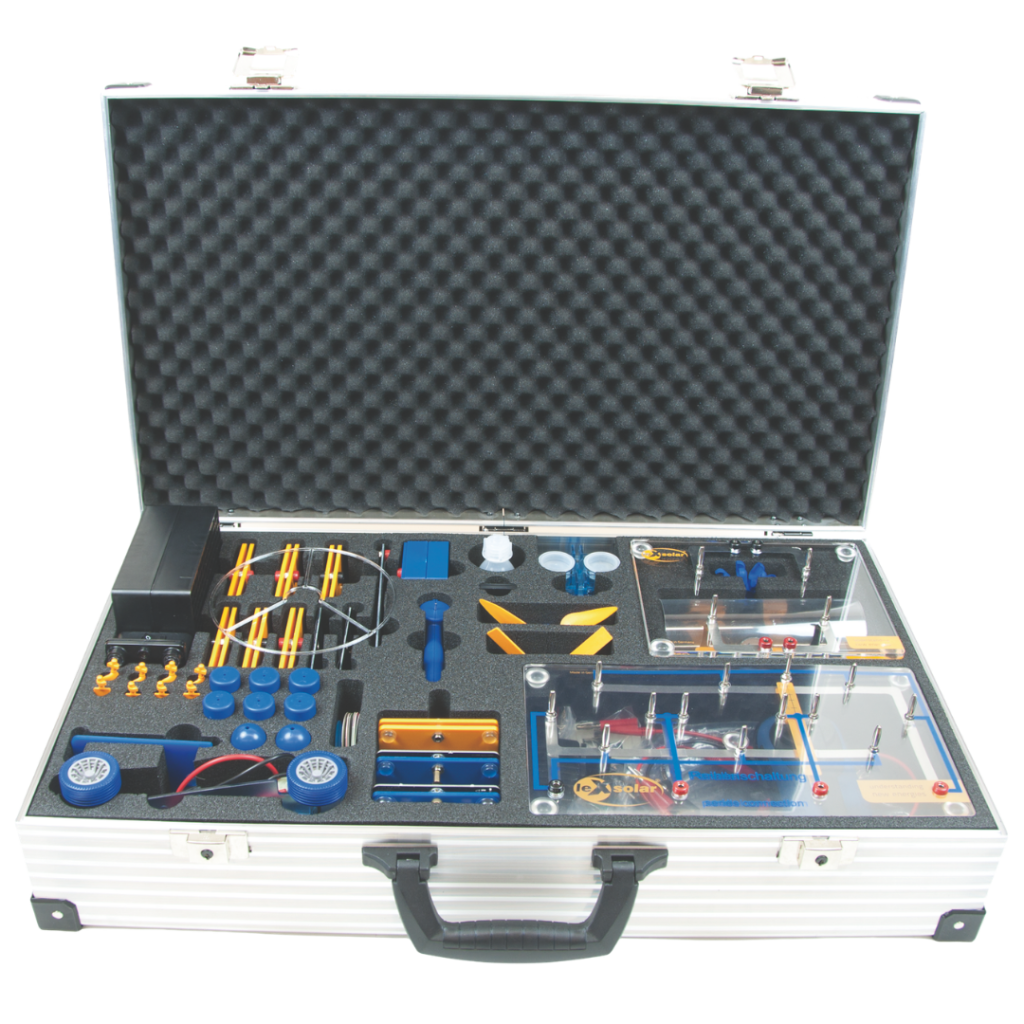
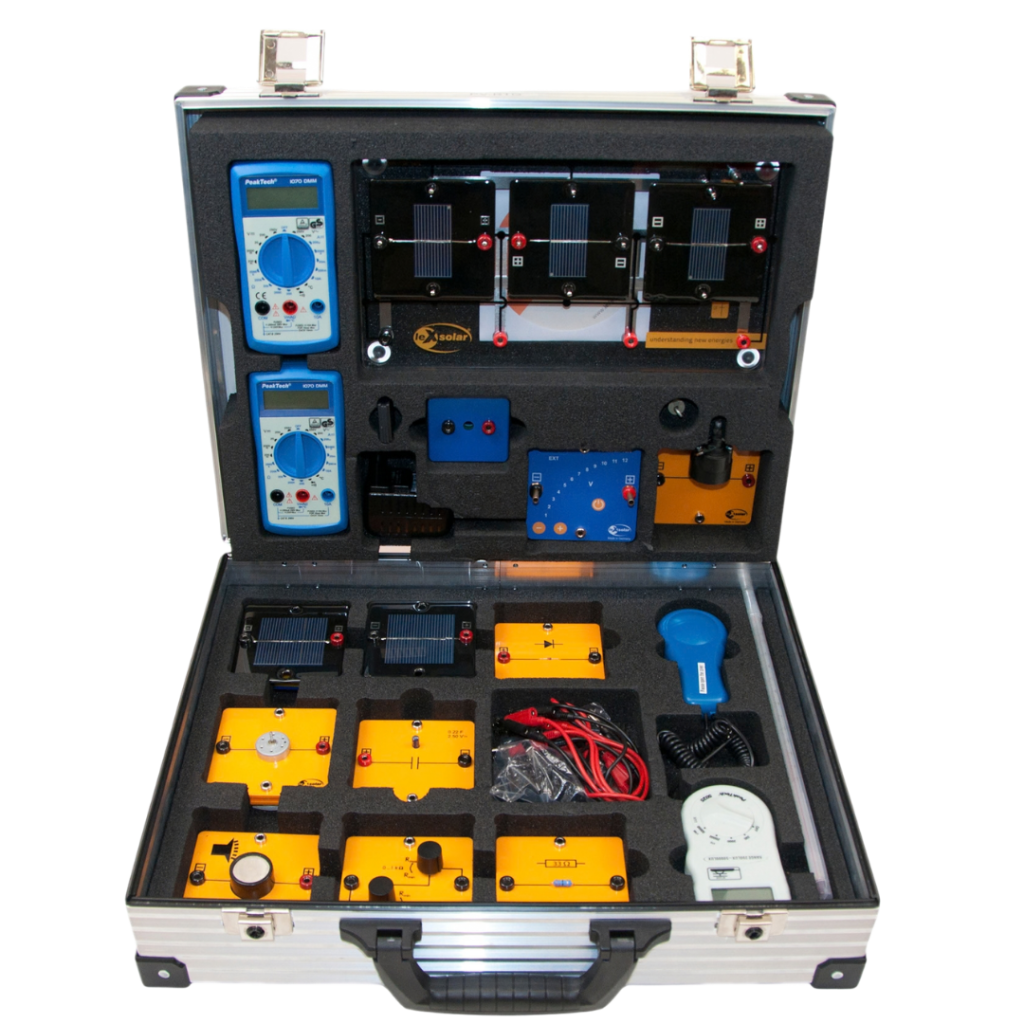
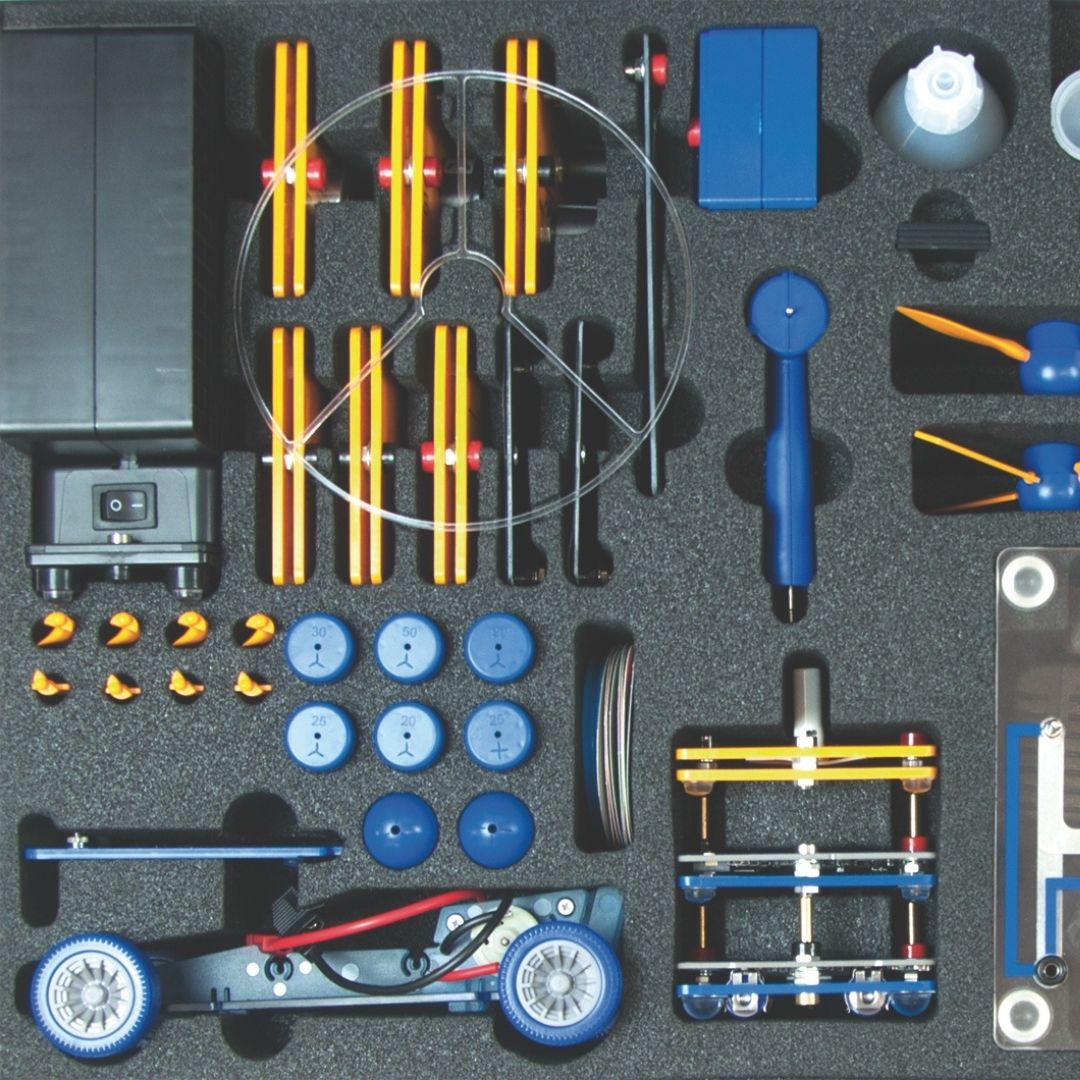
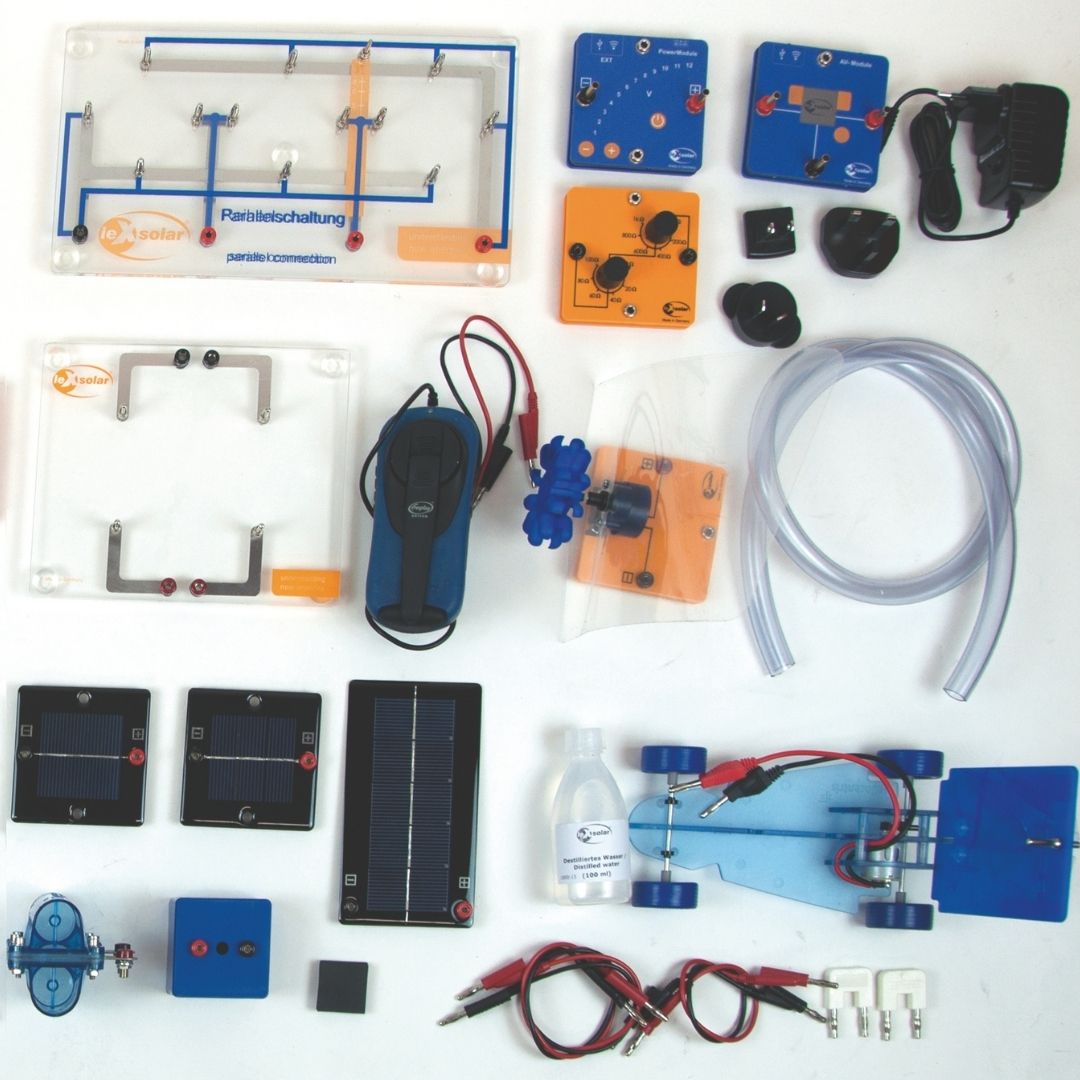
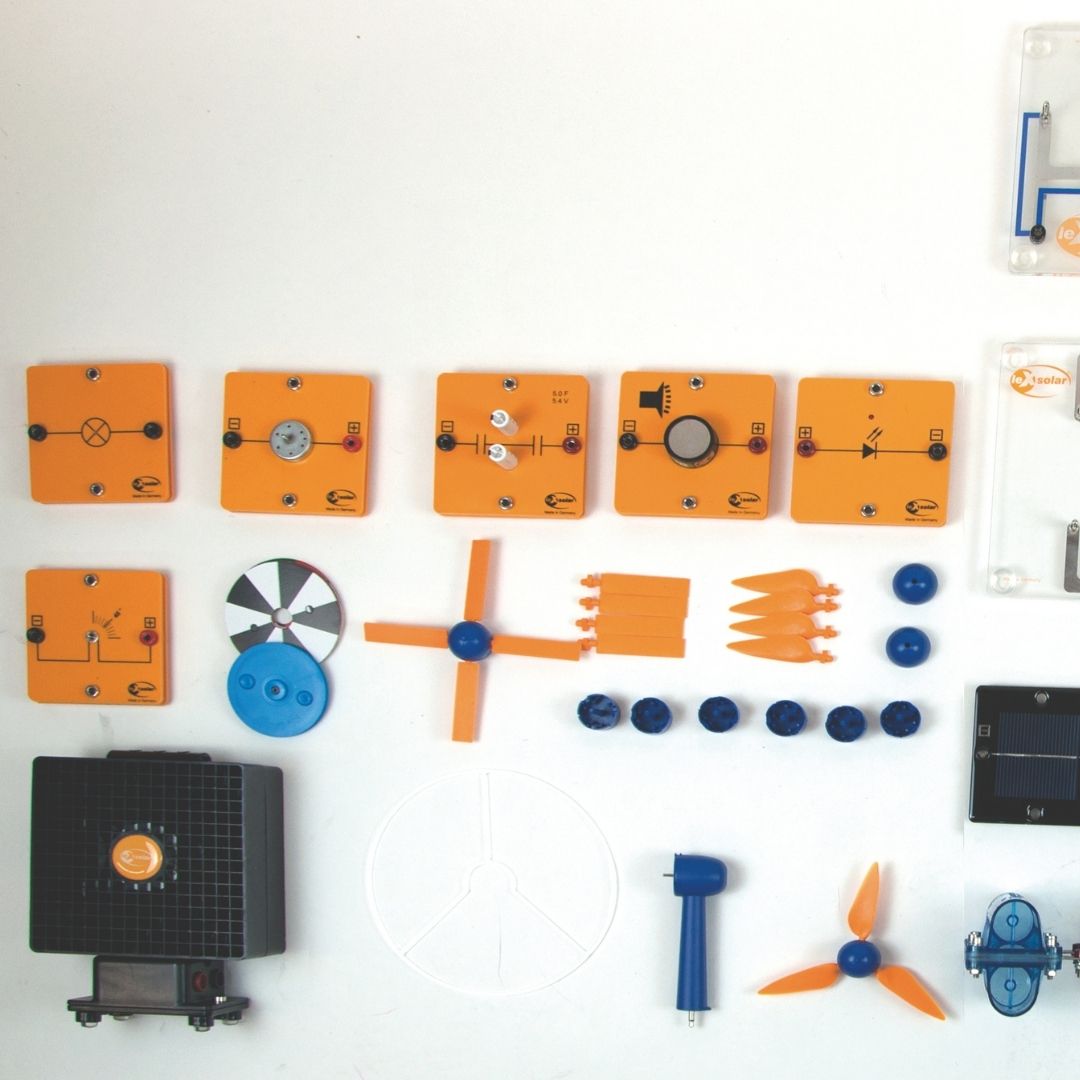
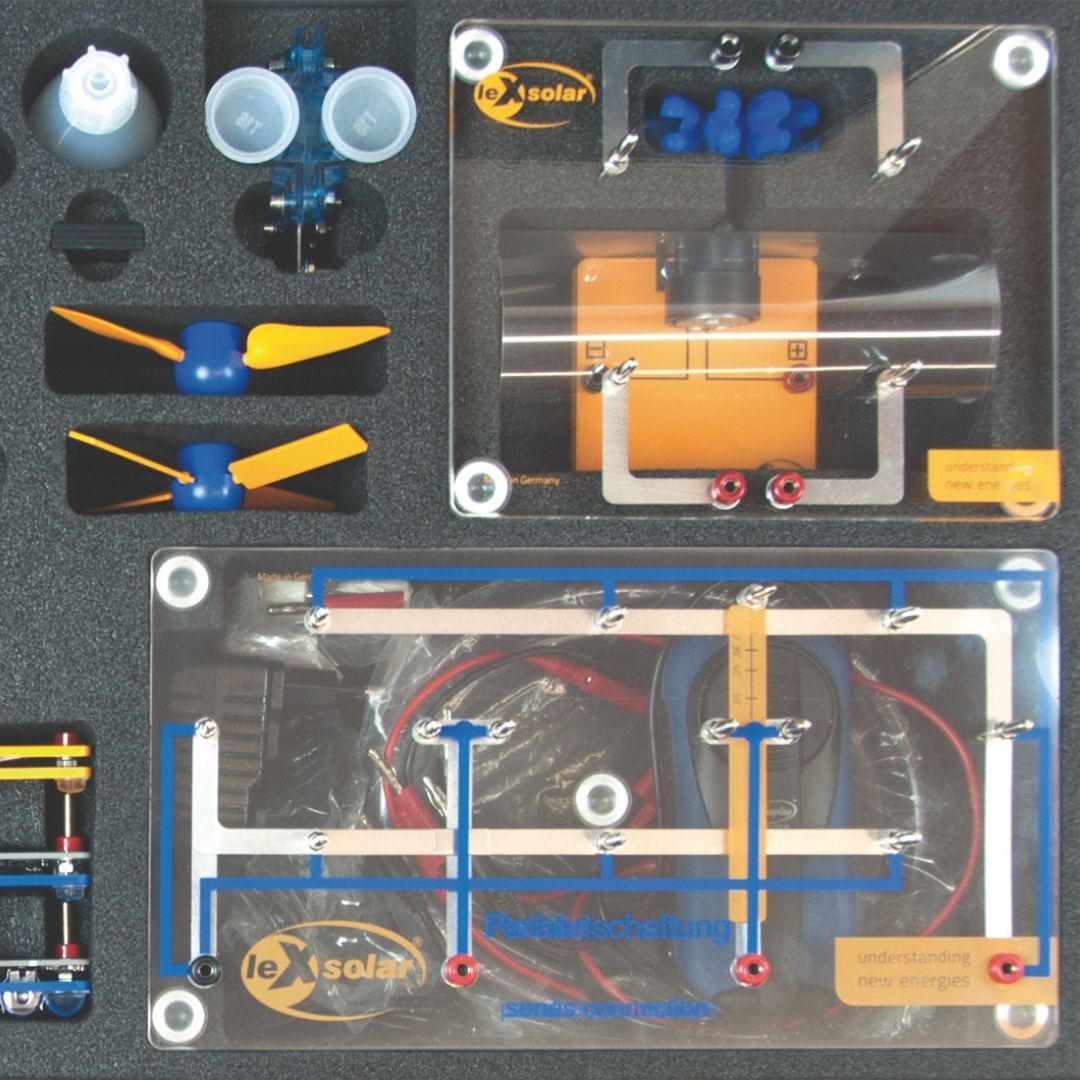
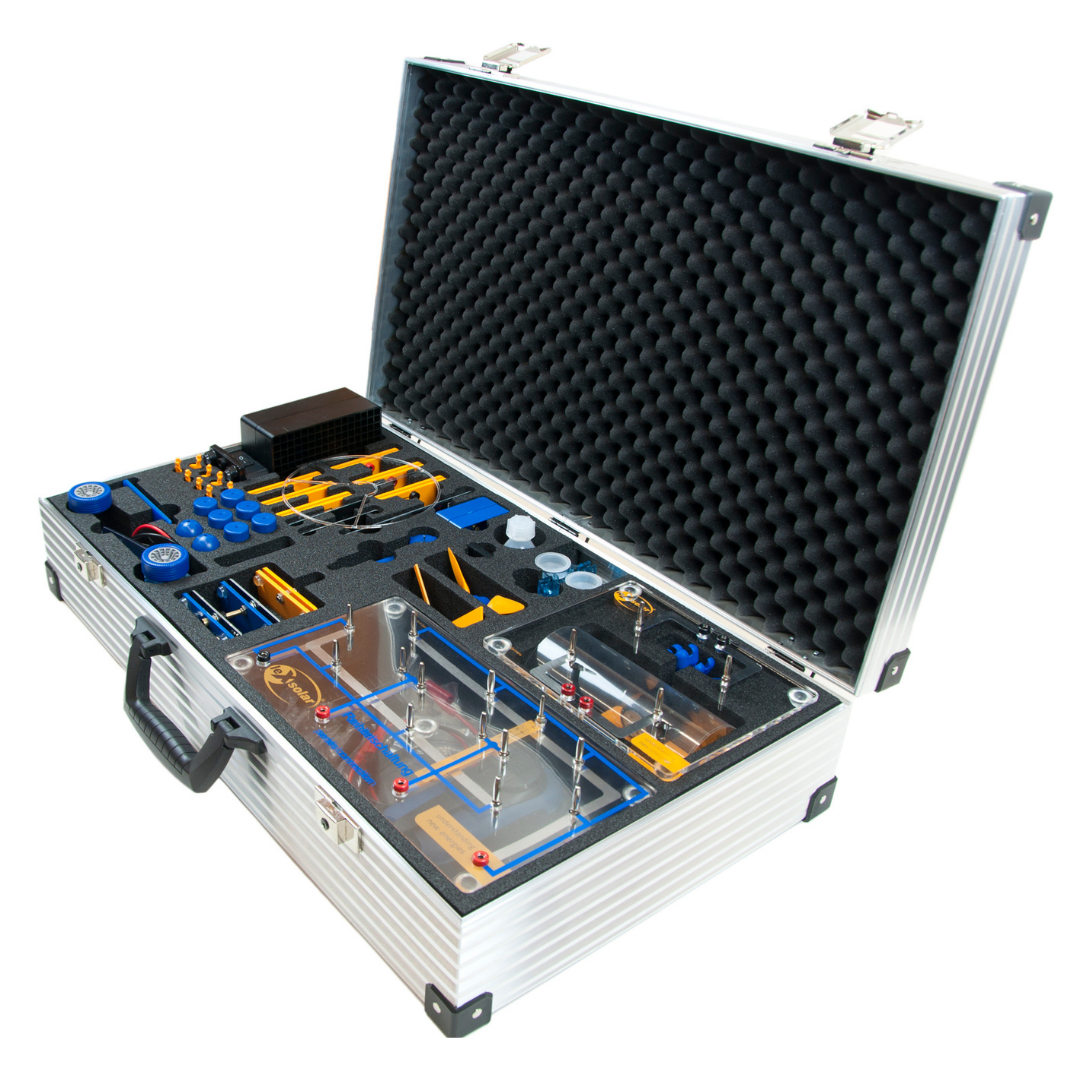
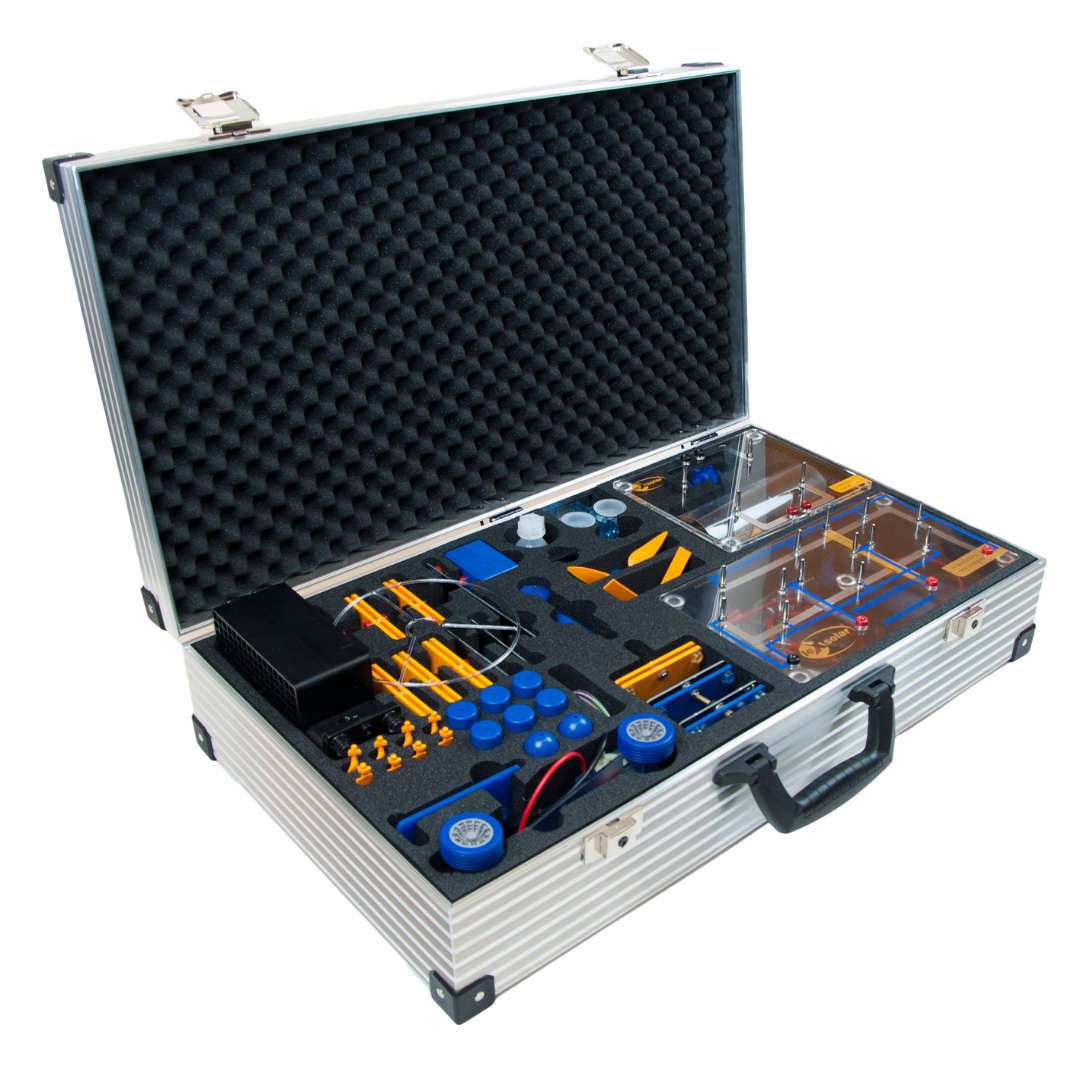
The kit includes solar modules, a configurable wind turbine system, water wheel, reversible fuel cell, electric model car, electrical loads, measurement equipment, and the necessary accessories for experimentation. This broad range of technologies makes the system especially useful for introducing students to renewable energy before progressing into more specialized energy topics.
Features
- All-in-one renewable energy learning system combines solar, wind, hydropower, fuel cell, energy storage, and electric mobility experiments.
- Qualitative and quantitative activities allow students to progress from basic energy demonstrations to measurement and performance analysis.
- Configurable wind turbine system supports up to 24 turbine configurations for investigating blade design, pitch, quantity, and performance.
- Hydrogen and fuel cell experiments introduce electrolysis, hydrogen energy, fuel cell operation, and electric vehicle applications.
- Complete portable system includes power, measurement, electrical, and experimental components without requiring additional equipment.
Renewable Energy Fundamentals
Explore different forms of renewable energy and understand how energy can be converted from one form into another.
Solar Energy
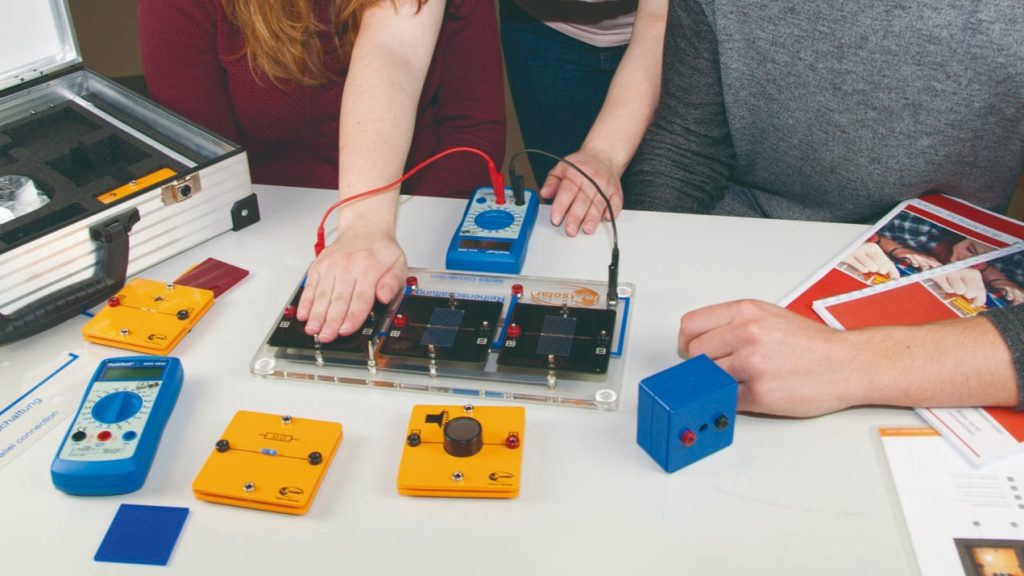
Investigate photovoltaic energy generation and analyze how surface area, illumination, angle of incidence, load, and shading affect solar cell performance.
Wind Energy
Explore how wind speed, blade shape, rotor configuration, blade pitch, and wind direction affect wind turbine operation and electrical output.
Hydropower
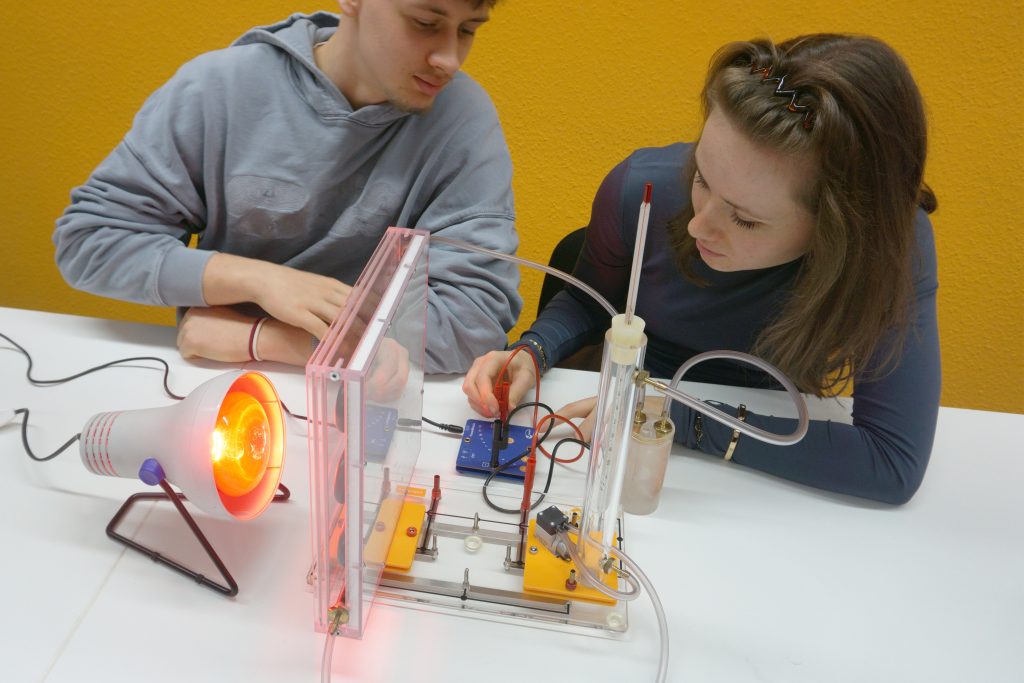
Investigate water as an energy source and determine how the height of falling water influences energy generation.
Hydrogen & Fuel Cells
Understand electrolysis, hydrogen production, and the conversion of hydrogen into electrical energy using a fuel cell.
Energy Storage
Explore methods for storing renewable energy and using stored energy to power electrical loads.
Electric Mobility
Investigate how stored electrical energy and hydrogen fuel cell technology can be applied to electric transportation.
Measurement & Analysis
Develop practical skills measuring voltage and current and interpreting performance characteristics of renewable energy systems.
Program Integration
leXsolar’s portable green energy learning systems are designed to supplement classroom instruction with engaging, hands-on STEM investigations that connect scientific theory to real-world applications. Each system supports inquiry-based learning through structured experiments that encourage observation, measurement, analysis, and problem-solving.
Included educational resources support both students and instructors with:
- Hands-on experimental activities
- Student investigation guides
- Instructor manuals
- Experiment setup and implementation support
This flexible approach lets educators integrate hands-on learning into science, technology, engineering, energy, and career and technical education programs while reinforcing key curriculum concepts through experimentation.
NewEnergy Ready-to-go: Renewable Energy Training Kit Product Details
This renewable energy training system includes:
- Solar Module, 0.5 V / 840 mA
- Solar Module, 1.5 V / 280 mA
- Solar Module, 2.5 V / 420 mA
- Large Base Unit
- Small Base Unit
- Lighting Module
- Potentiometer Module
- Buzzer Module
- Light Bulb Module
- Motor Module
- Color Disc Set
- Solar Cell Cover Set
- Capacitor Module, 5.0 F / 5.4 V
- Red LED Module
- Wind Rotor Set
- Wind Machine
- Assembled Wind Rotor Set
- Wind Turbine Module
- Hand Generator
- Water Wheel Module
- Reversible Fuel Cell
- Electric Model Car
- AV Measurement Module
- PowerModule
- Distilled Water
- Silicone Tubing
- Test Leads
- Short-Circuit Plugs
- Layout Diagram
- Startup Information
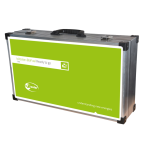
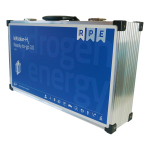
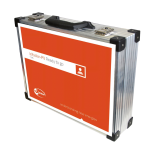
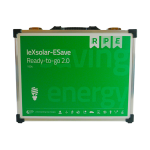
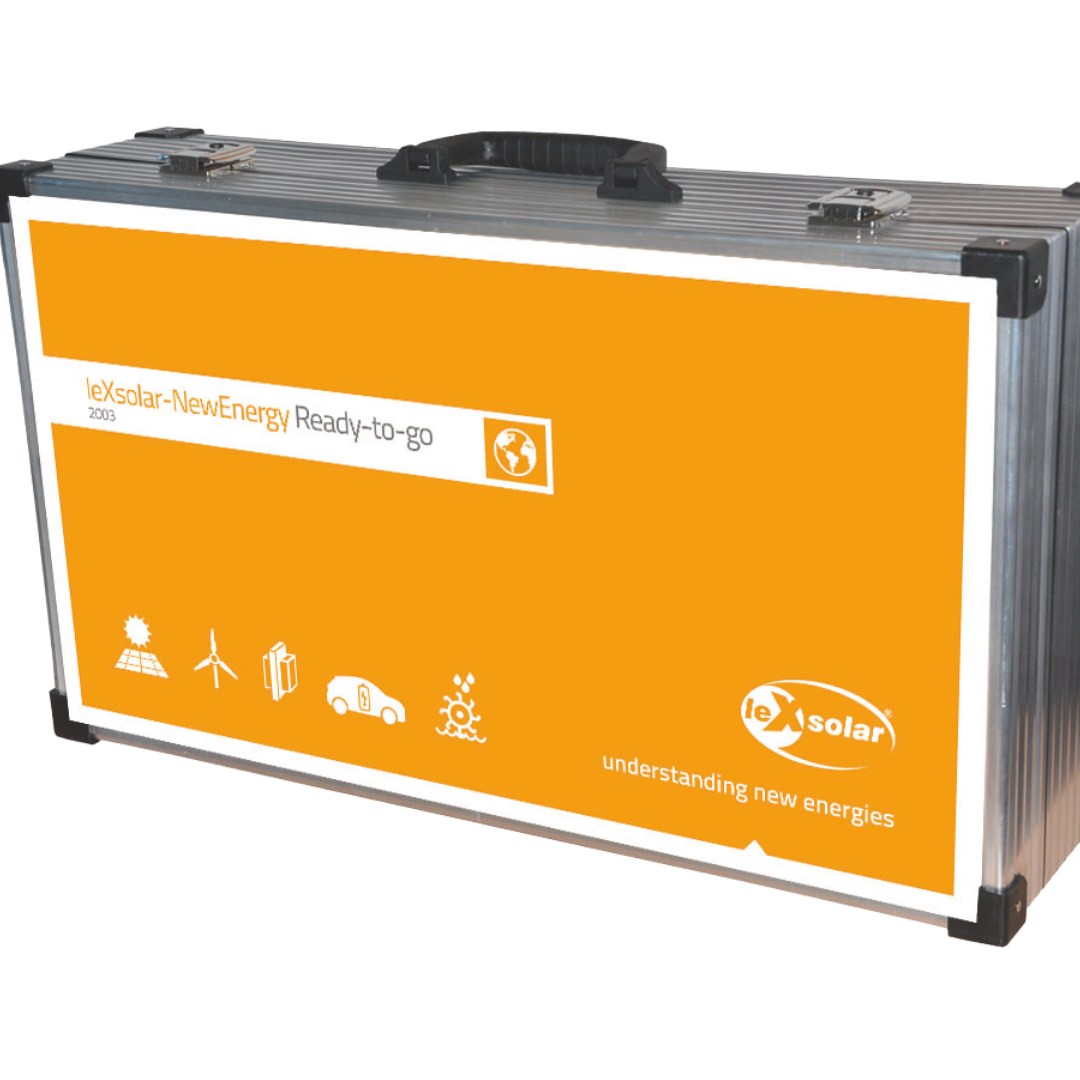
- Protective Carrying Case
Typical Practical Tasks
- Convert mechanical energy from a hand generator into electricity
- Use generated electricity to power lights, motors, and buzzers
- Power a motor, buzzer, and LED using solar energy
- Investigate the relationship between solar cell area and power
- Explore the effects of shading on photovoltaic modules
- Measure the effect of angle of incidence on solar cell output
- Investigate solar cell output at different illumination levels
- Generate and analyze solar cell I-V characteristics
- Examine the effect of wind speed on turbine output
- Determine wind turbine startup speed
- Generate wind turbine characteristic curves
- Investigate the influence of rotor blade quantity
- Compare rotor blade shapes
- Investigate blade pitch and wind direction
- Generate electricity using a water wheel
- Investigate the influence of falling-water height
- Store energy generated from solar and wind sources
- Produce hydrogen through electrolysis
- Investigate electrolyzer characteristics
- Investigate fuel cell characteristics
- Operate an electric model car using a reversible fuel cell
- Compare the energy demands of different electrical loads
- Compare LED and incandescent lighting technologies
Technical Specifications
- Weight: Approx. 14.3 lbs
- PowerModule Output: 0-12 V DC
- Maximum PowerModule Current: 2 A
- Maximum PowerModule Output: 24 W
- AV Module Voltage Measurement Range: 0-12 V
- AV Module Current Measurement Range: 0-2 A
- Wind Turbine Configurations: Up to 24 configurations
- Capacitor: 5.0 F / 5.4 V