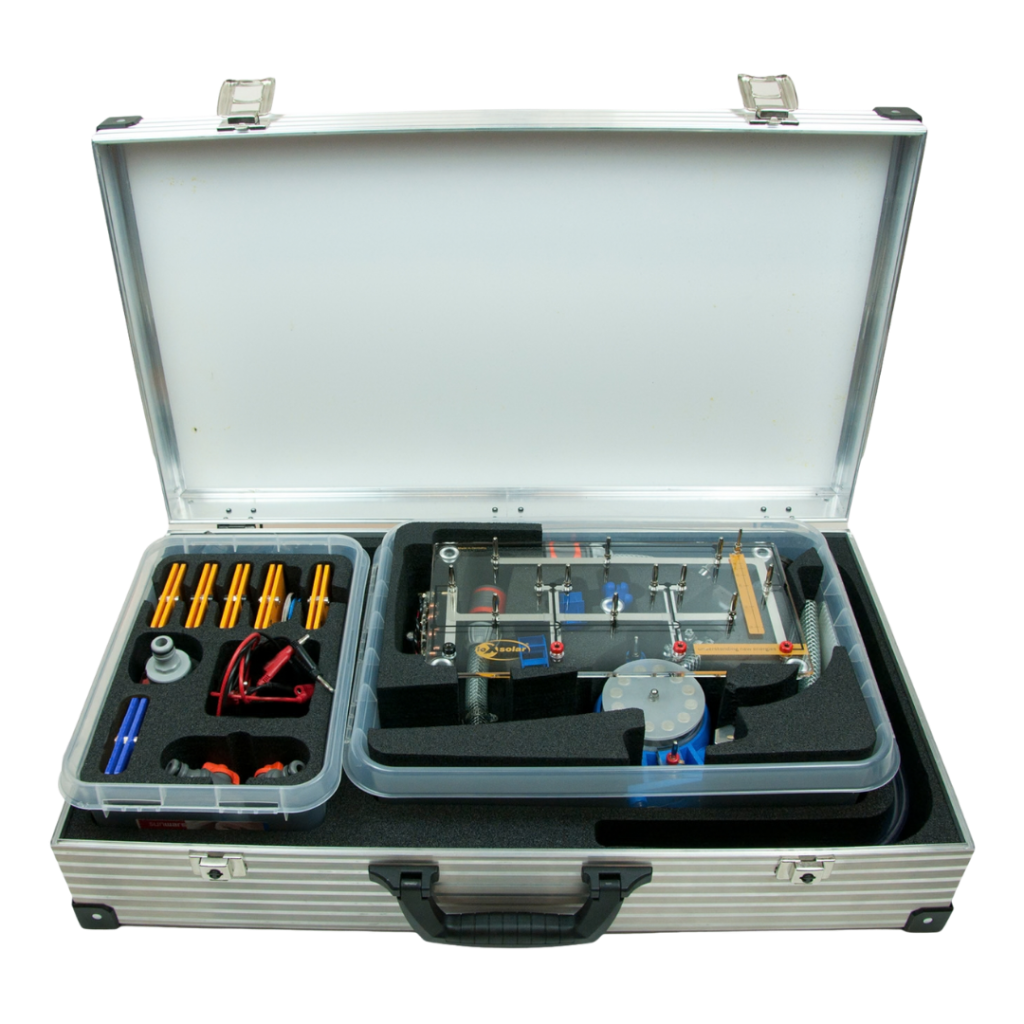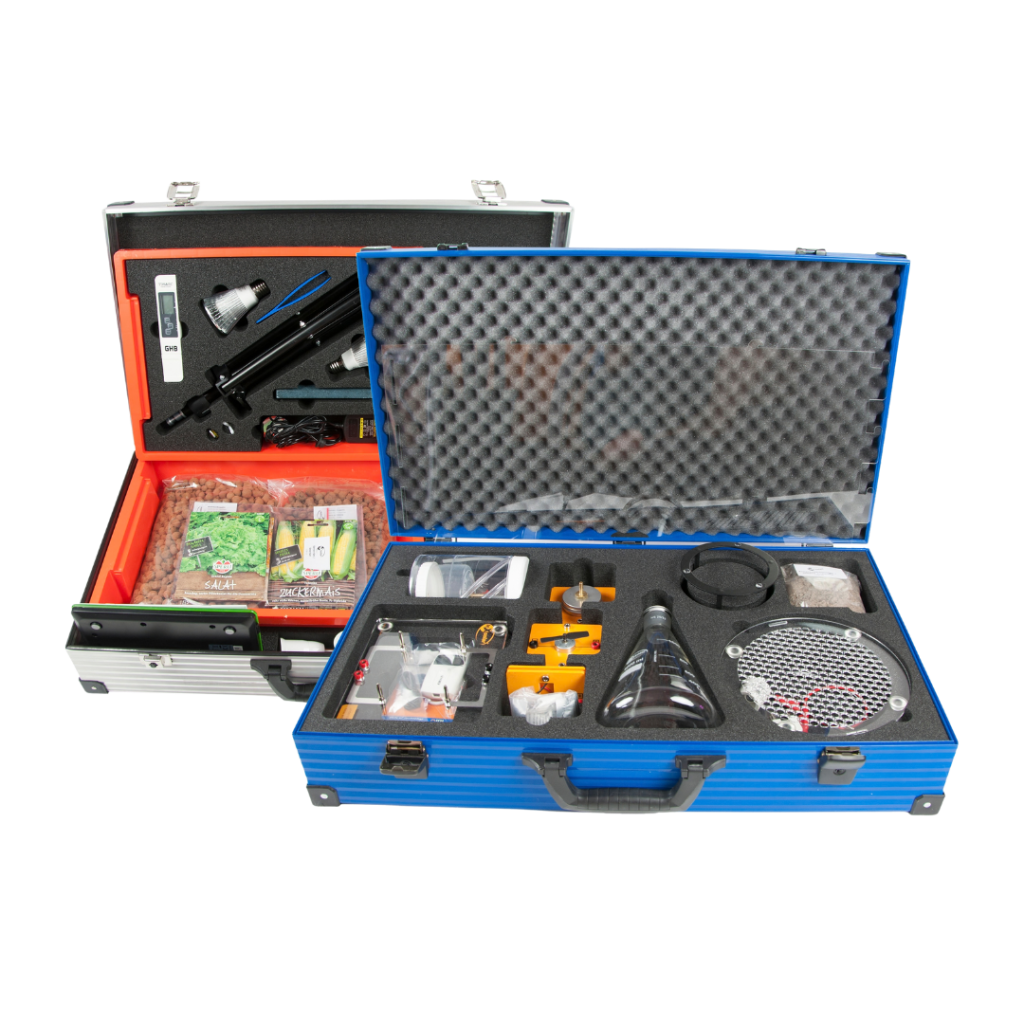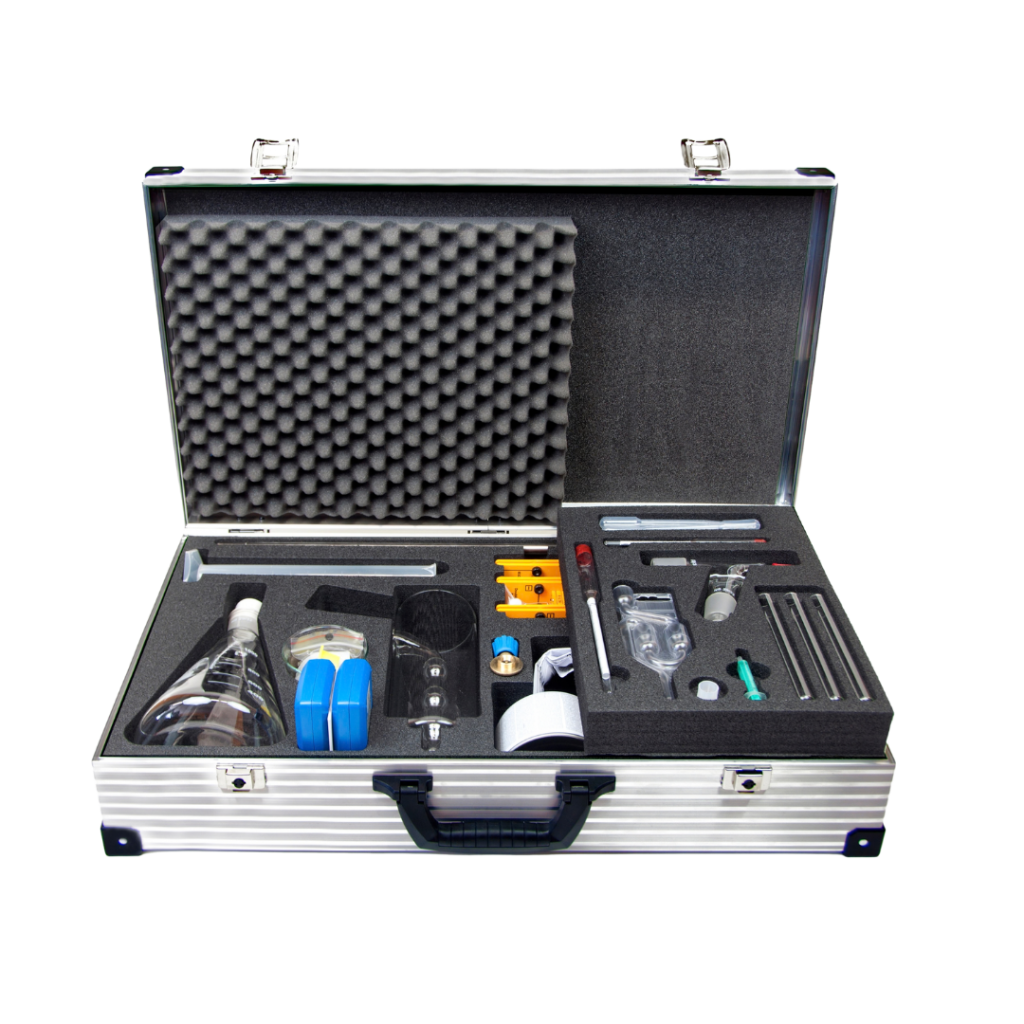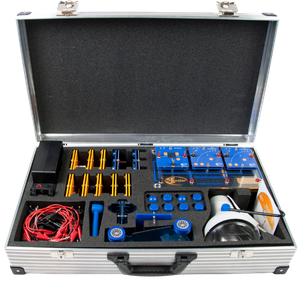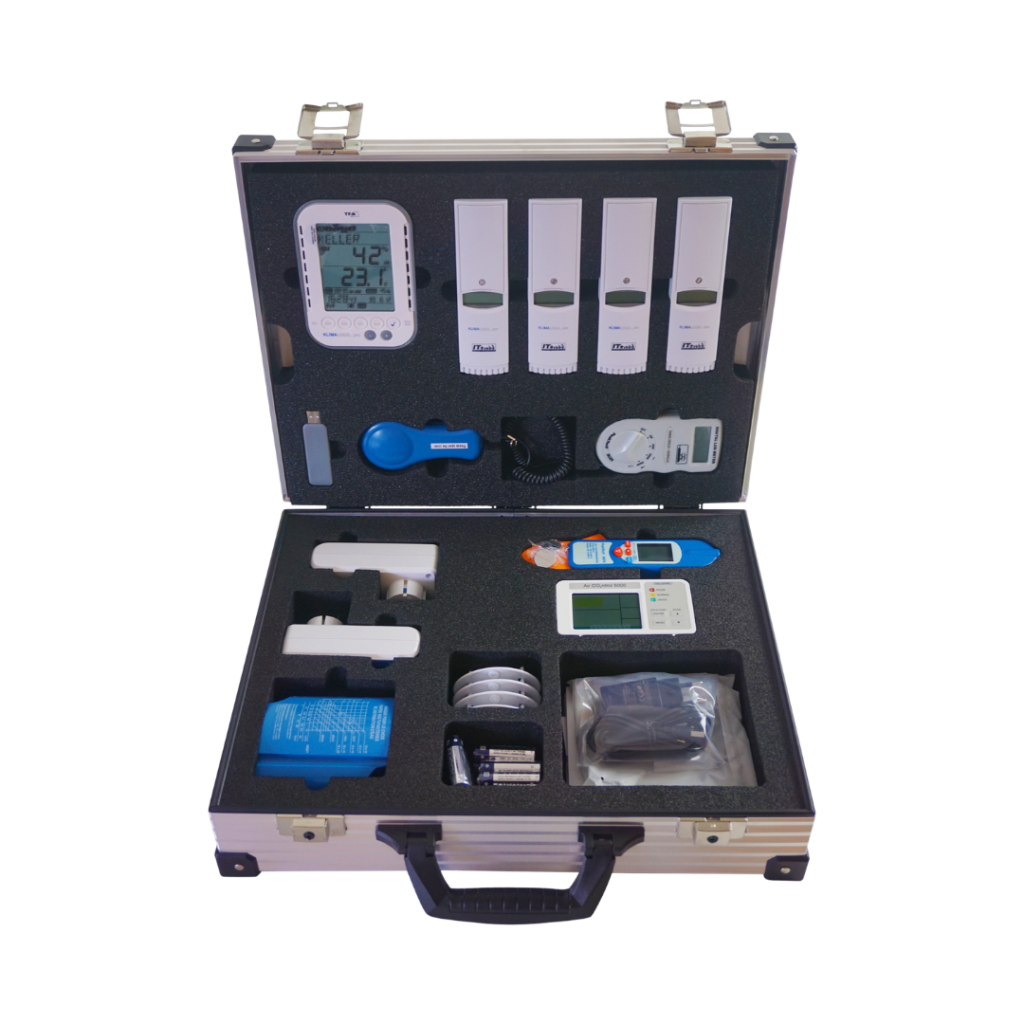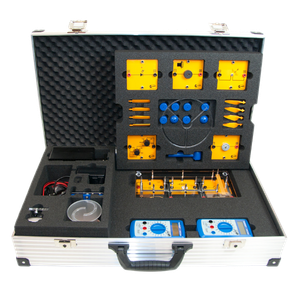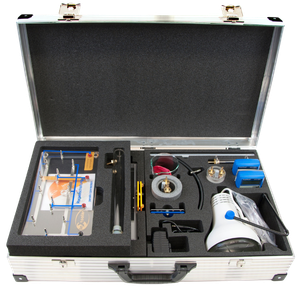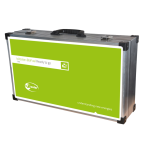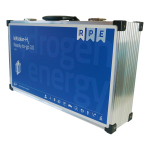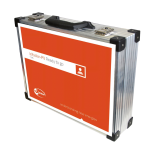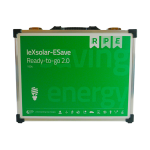
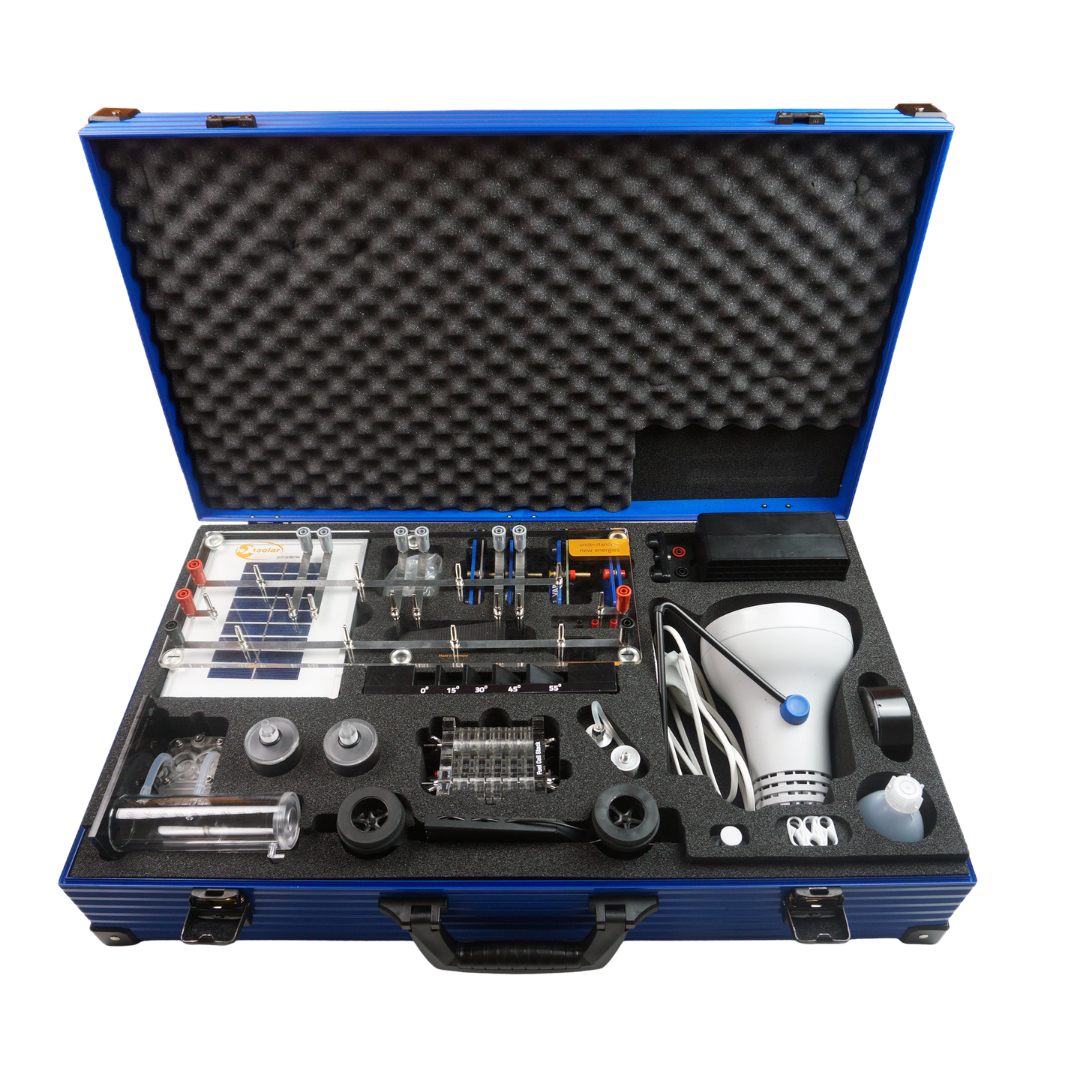
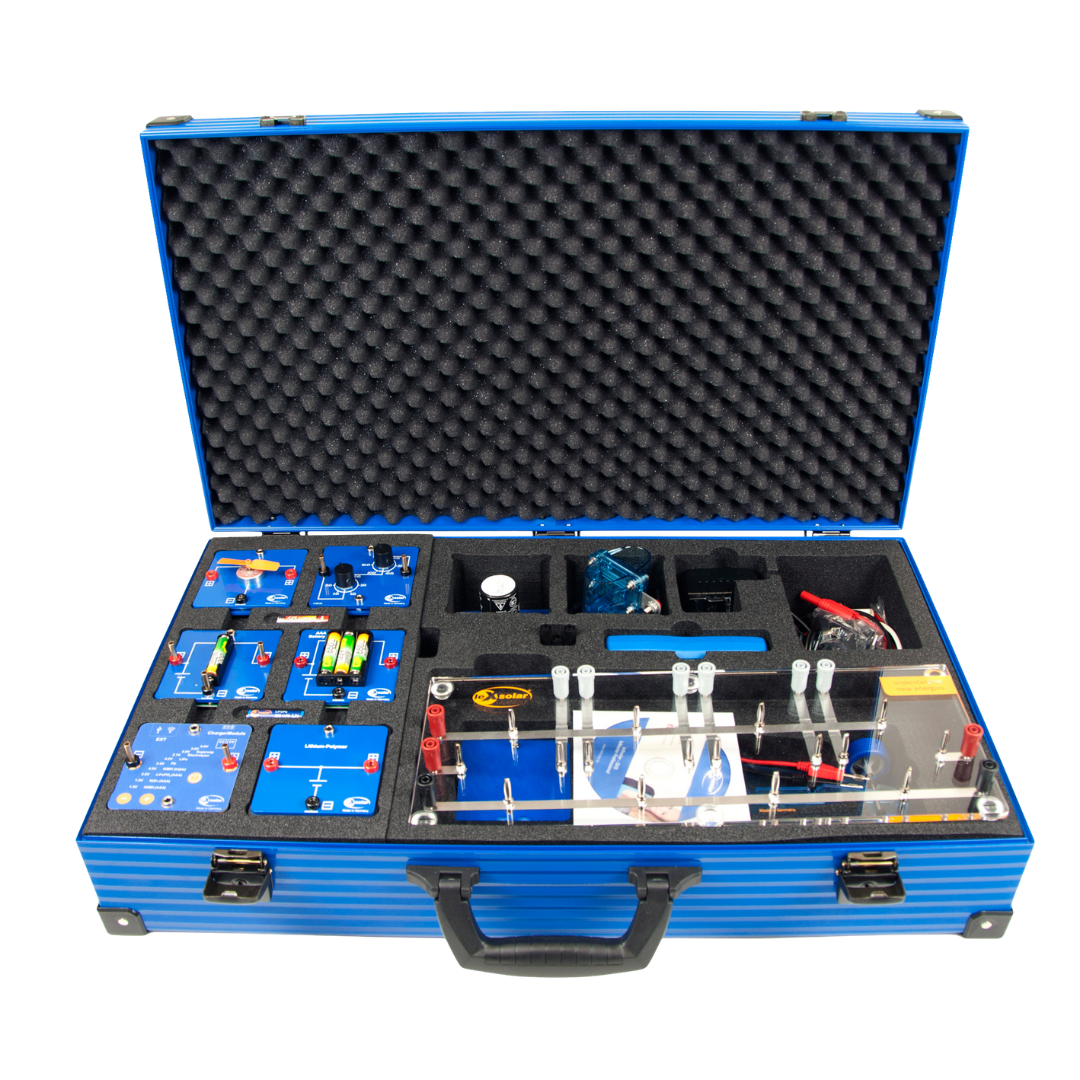
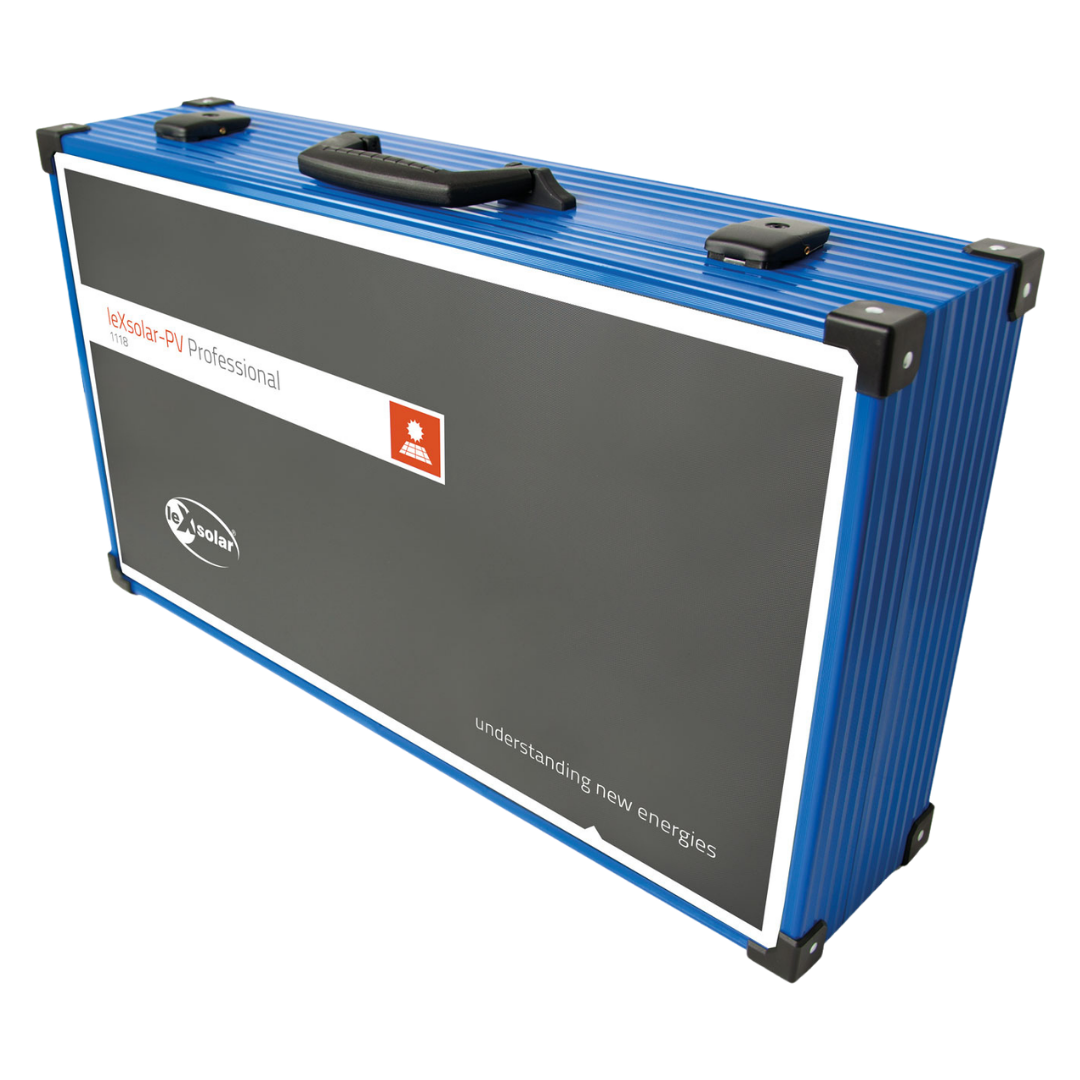
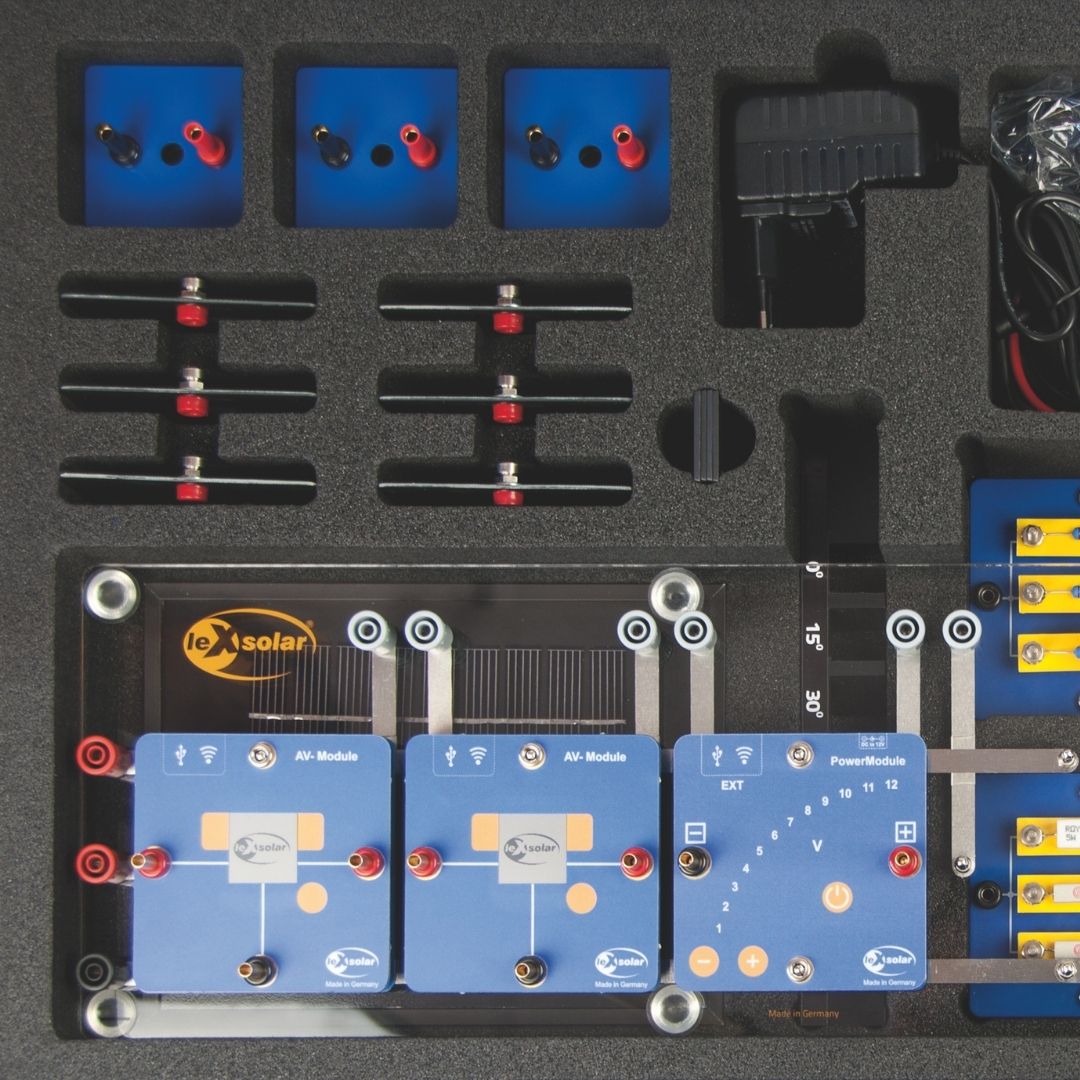
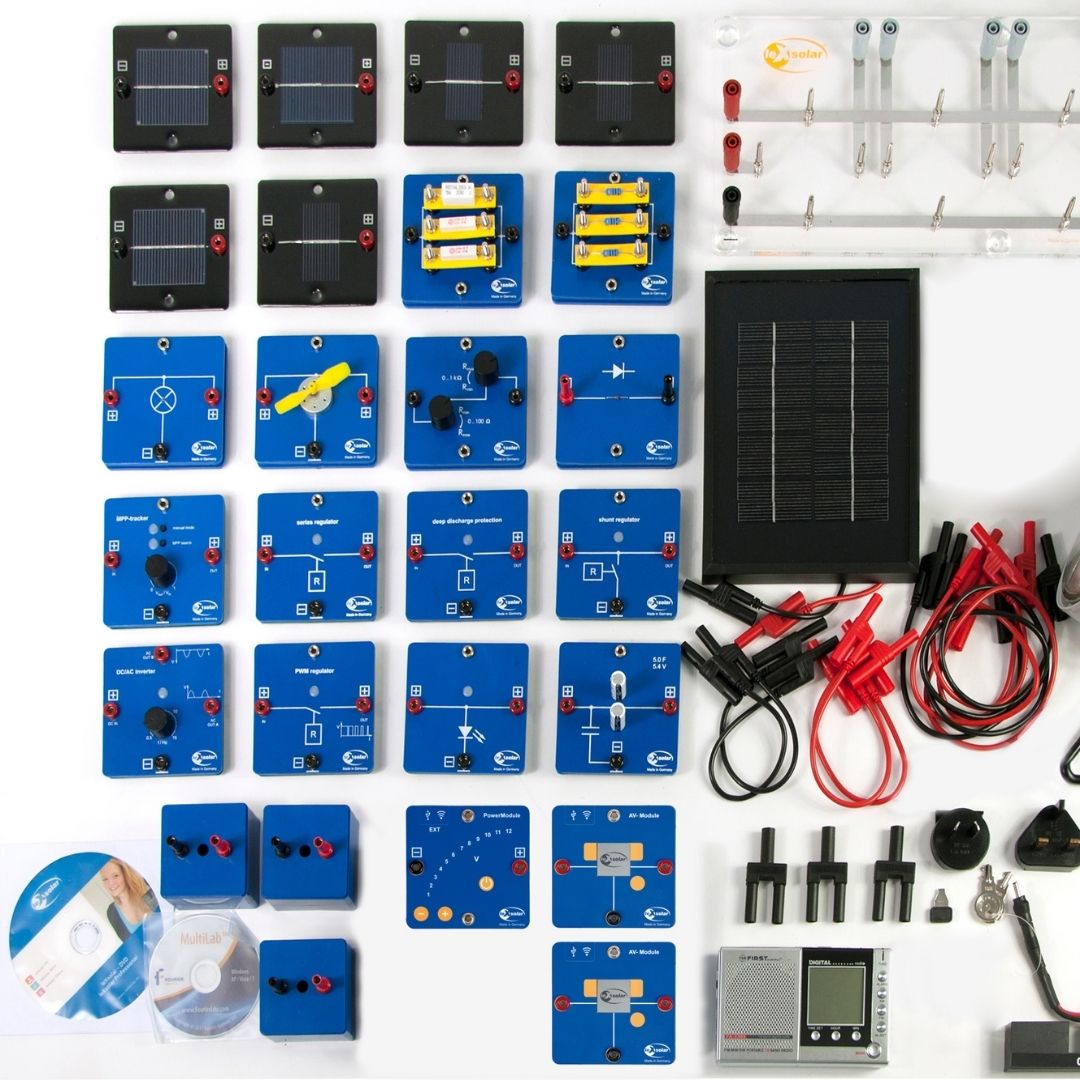
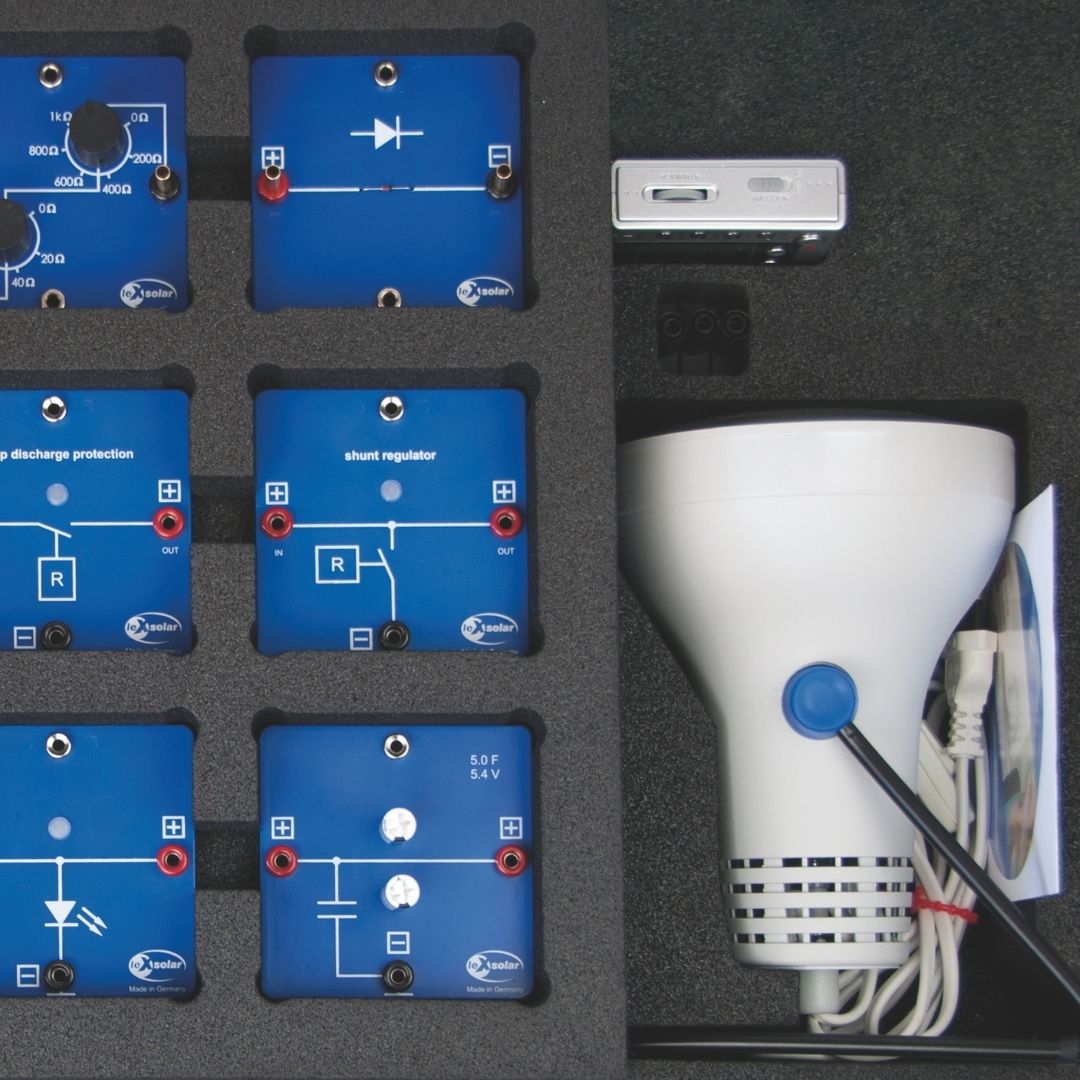
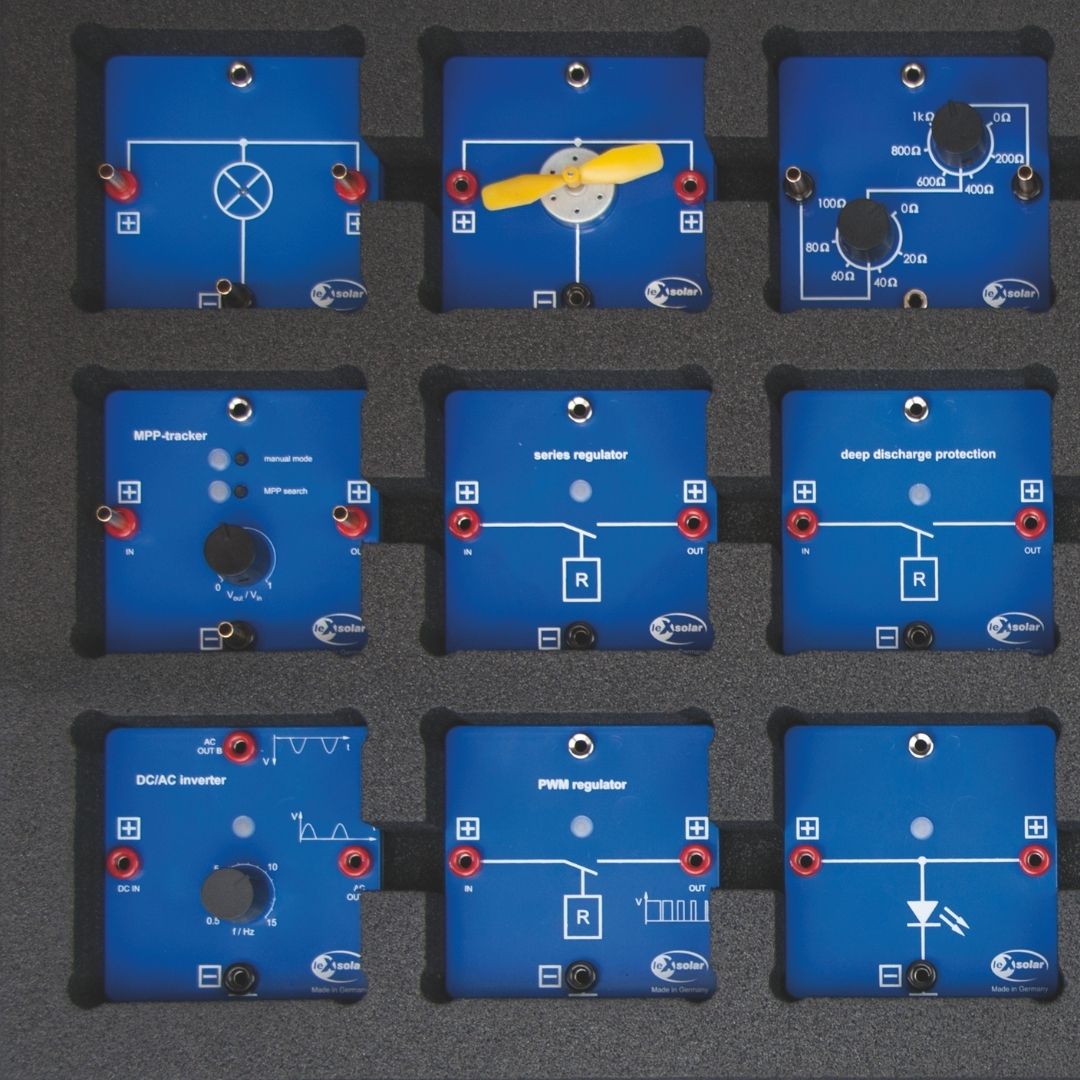
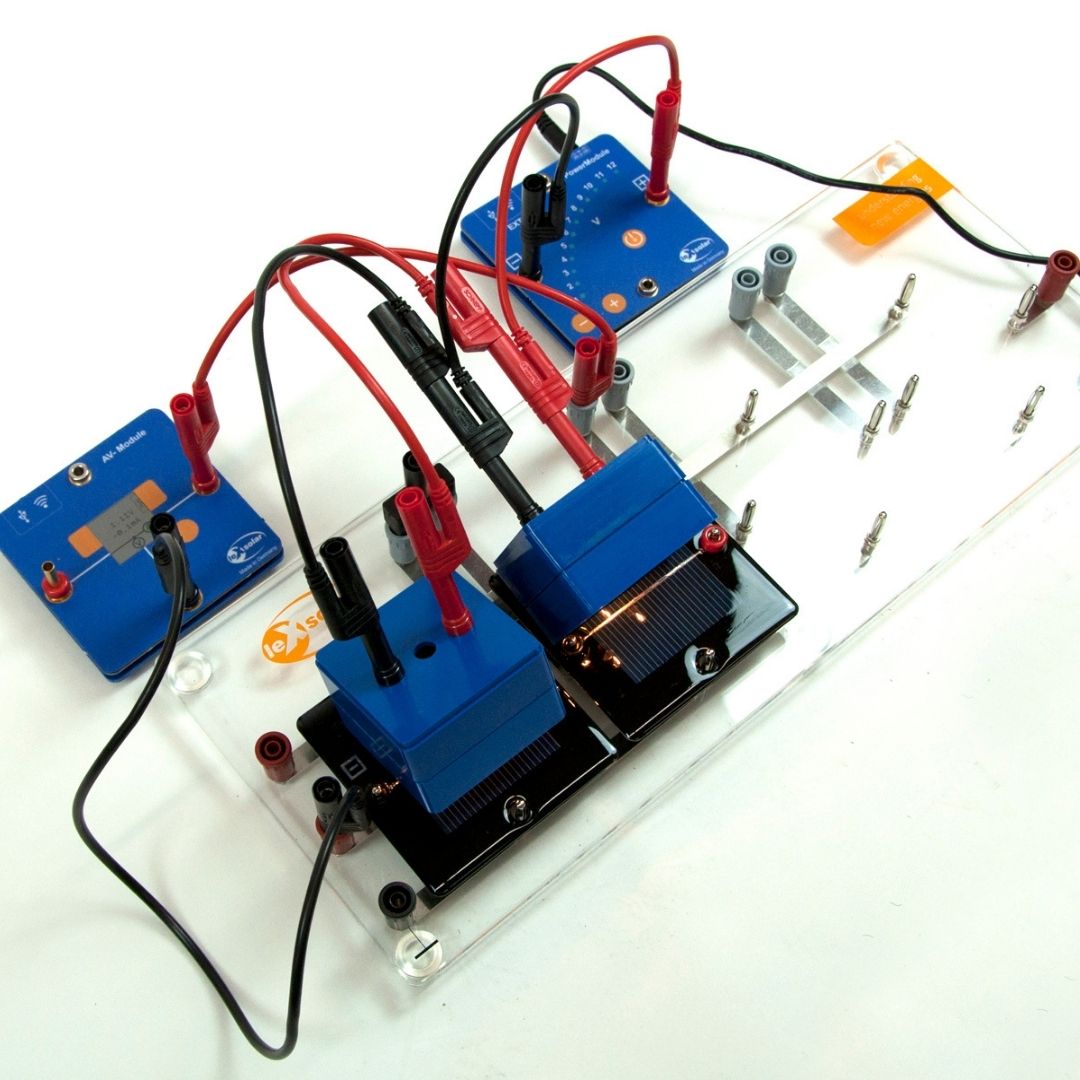
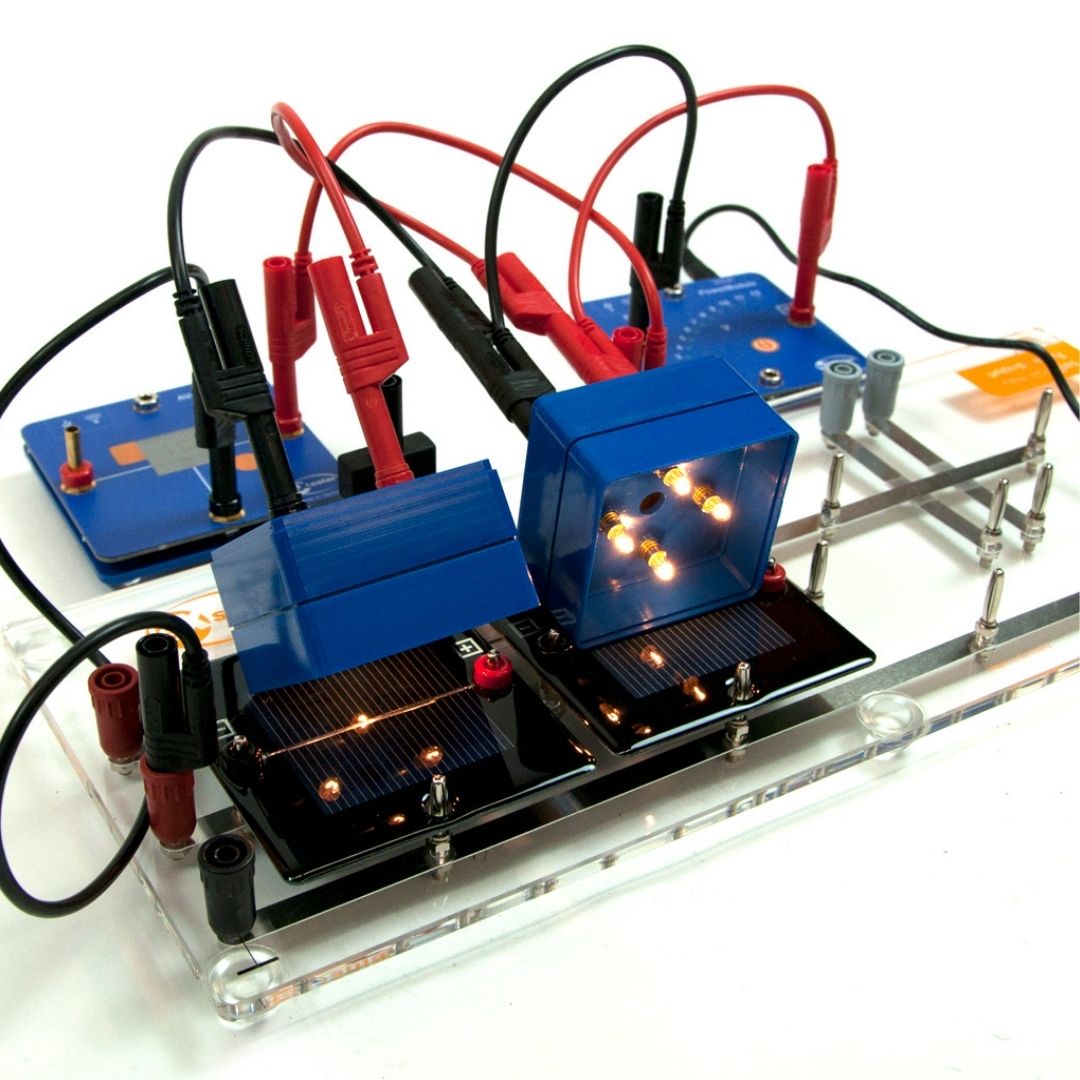
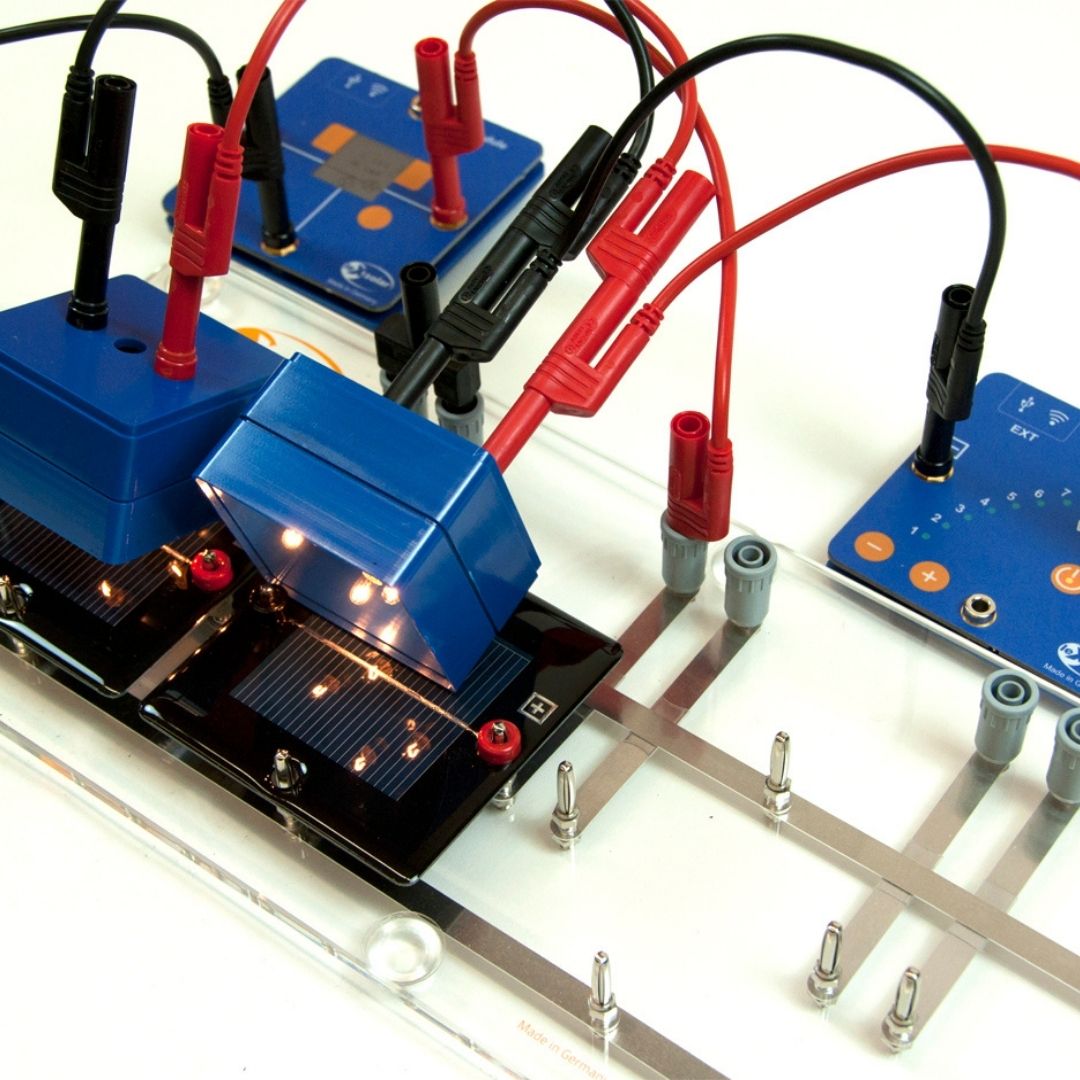
Understanding photovoltaic systems requires more than learning how a solar cell generates electricity. The PV Professional: Photovoltaic Systems Training Kit from leXsolar provides a hands-on platform for exploring the electrical principles, components, controls, and system configurations used in photovoltaic technology.
Students begin with electrical engineering and photovoltaic fundamentals, investigating voltage, current, power, resistance, irradiance, temperature, shading, and solar cell characteristics. They can then progress to system-level topics, including series and shunt regulators, PWM charge regulation, deep-discharge protection, maximum power point tracking, DC/AC conversion, and off-grid PV systems.
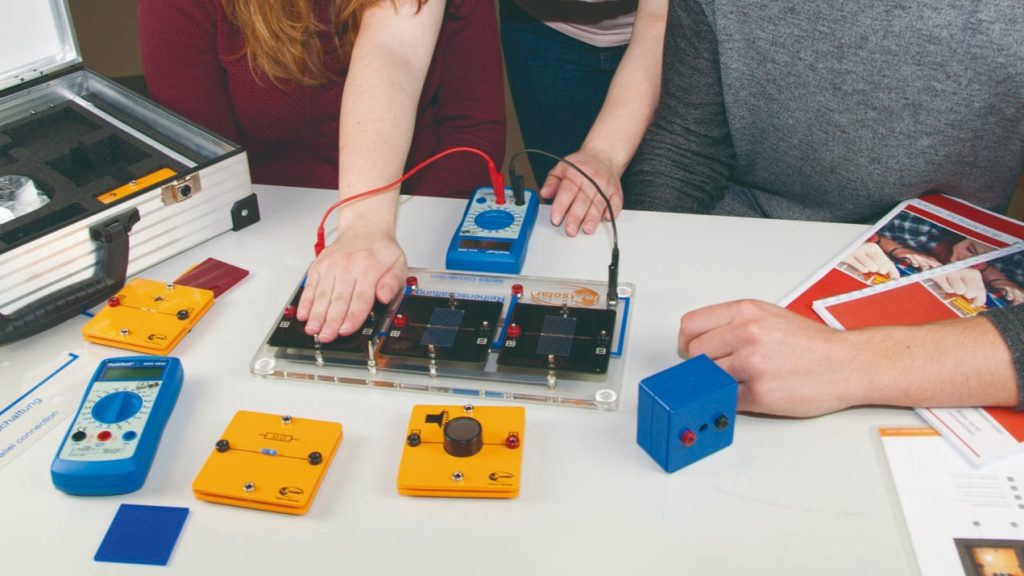
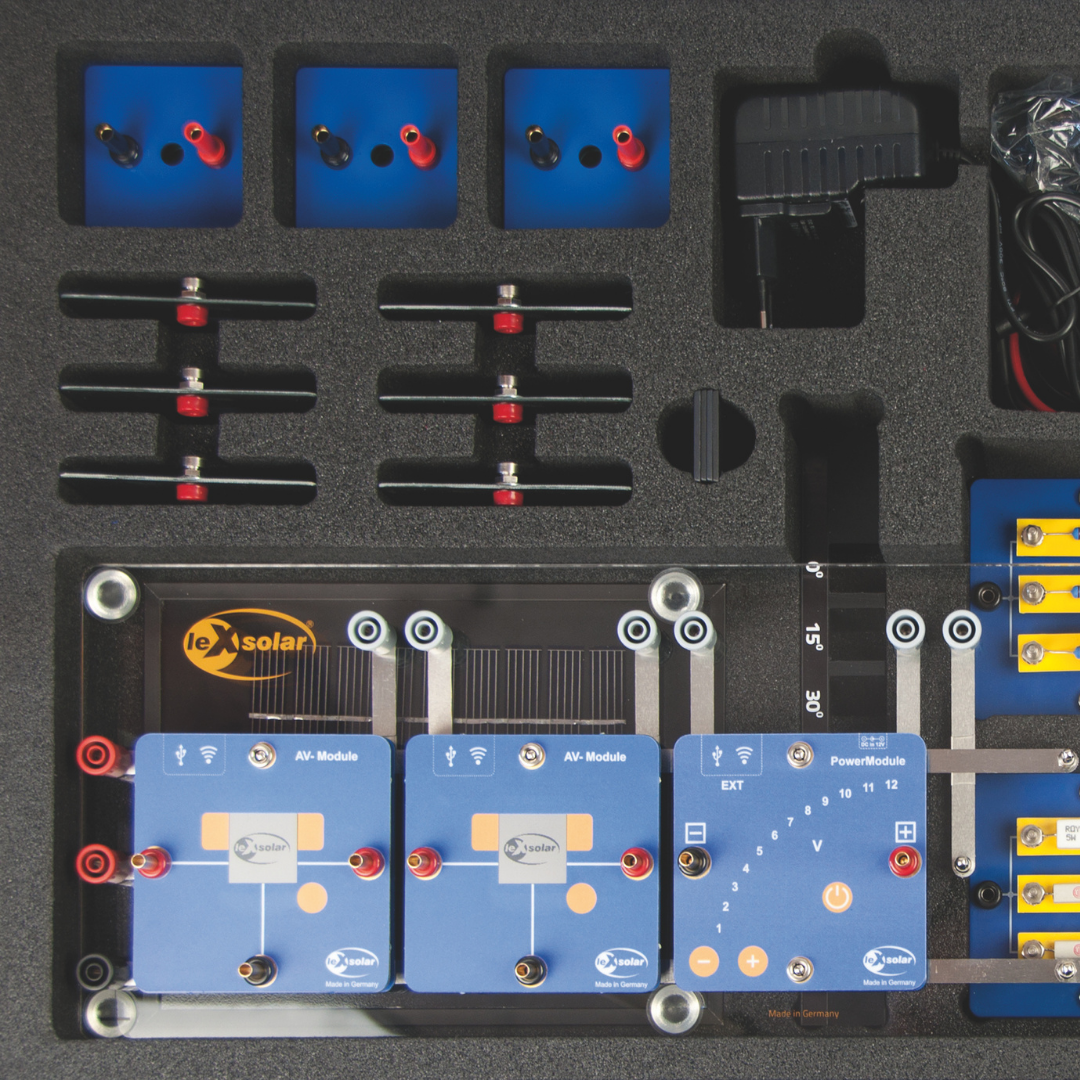
The modular system allows individual components to be analyzed independently before students combine them into more complex laboratory-scale photovoltaic systems. Measurement modules, multiple solar modules, electrical loads, control components, and instructional resources provide a comprehensive platform for technical solar energy education and training.
Features
- Advanced photovoltaic training system progresses from solar cell fundamentals to complete laboratory-scale PV systems.
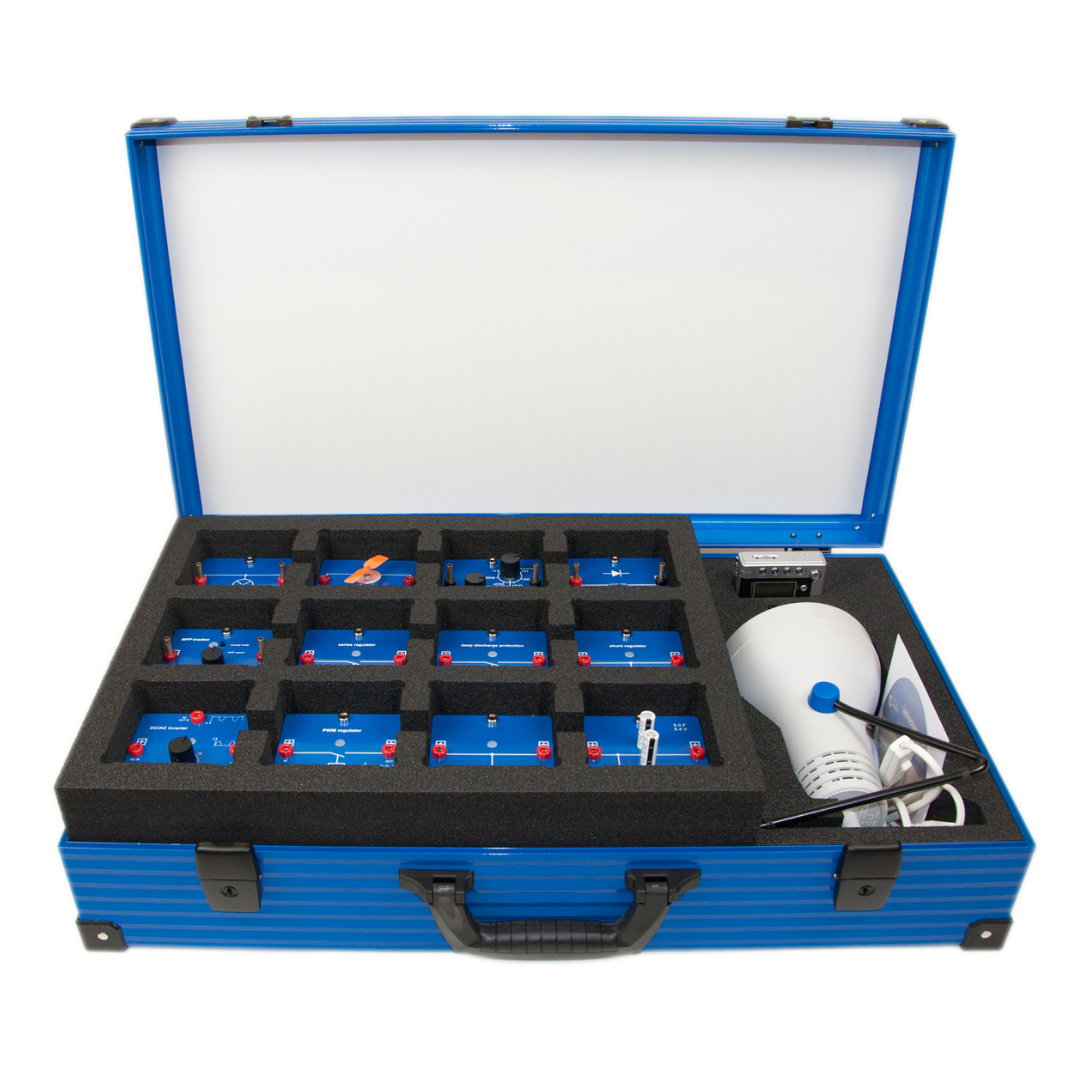
- Explore real PV system components including PWM, series and shunt regulators, deep-discharge protection, MPP tracking, and DC/AC inversion.
- Investigate solar performance variables including illumination, temperature, angle of incidence, surface area, and partial shading.
- Modular components and measurement tools support detailed analysis of individual devices and complete photovoltaic configurations.
- Hands-on off-grid system experiments connect photovoltaic theory with practical power generation, regulation, storage, and electrical loads.
Electrical Engineering Fundamentals
Measure voltage, current, and power while investigating Ohm’s Law and series and parallel circuits.
Photovoltaic Fundamentals
Explore solar cell operation and investigate how cells behave in series and parallel configurations.
Solar Cell Performance
Analyze the effects of illumination, temperature, surface area, angle of incidence, and shading on photovoltaic output.
I-V Characteristics & Maximum Power Point
Generate and interpret solar cell I-V curves while investigating maximum power point and fill factor.
Charge Regulation
Investigate series, shunt, and PWM regulators and compare methods used to manage photovoltaic energy.
Maximum Power Point Tracking
Explore the operation of an MPP tracker using automatic and manual modes to understand maximum power point tracking principles.
Off-Grid Photovoltaic Systems
Configure and investigate the components and operating conditions of laboratory-scale off-grid PV systems.
DC/AC Power Conversion
Investigate inverter operation and the conversion of photovoltaic DC power into alternating current.
Program Integration
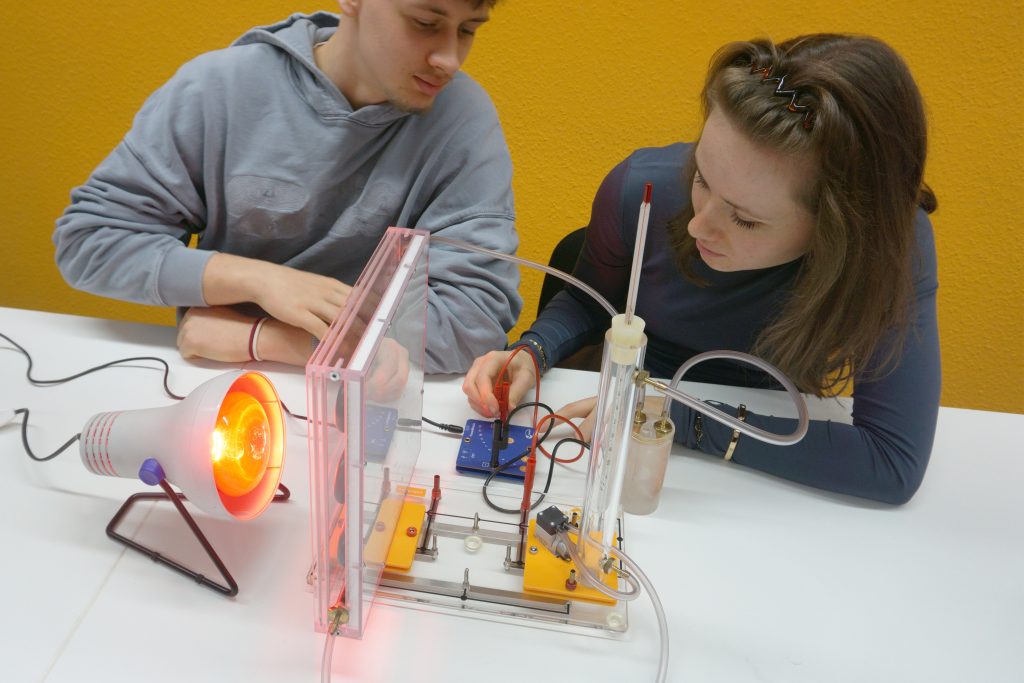
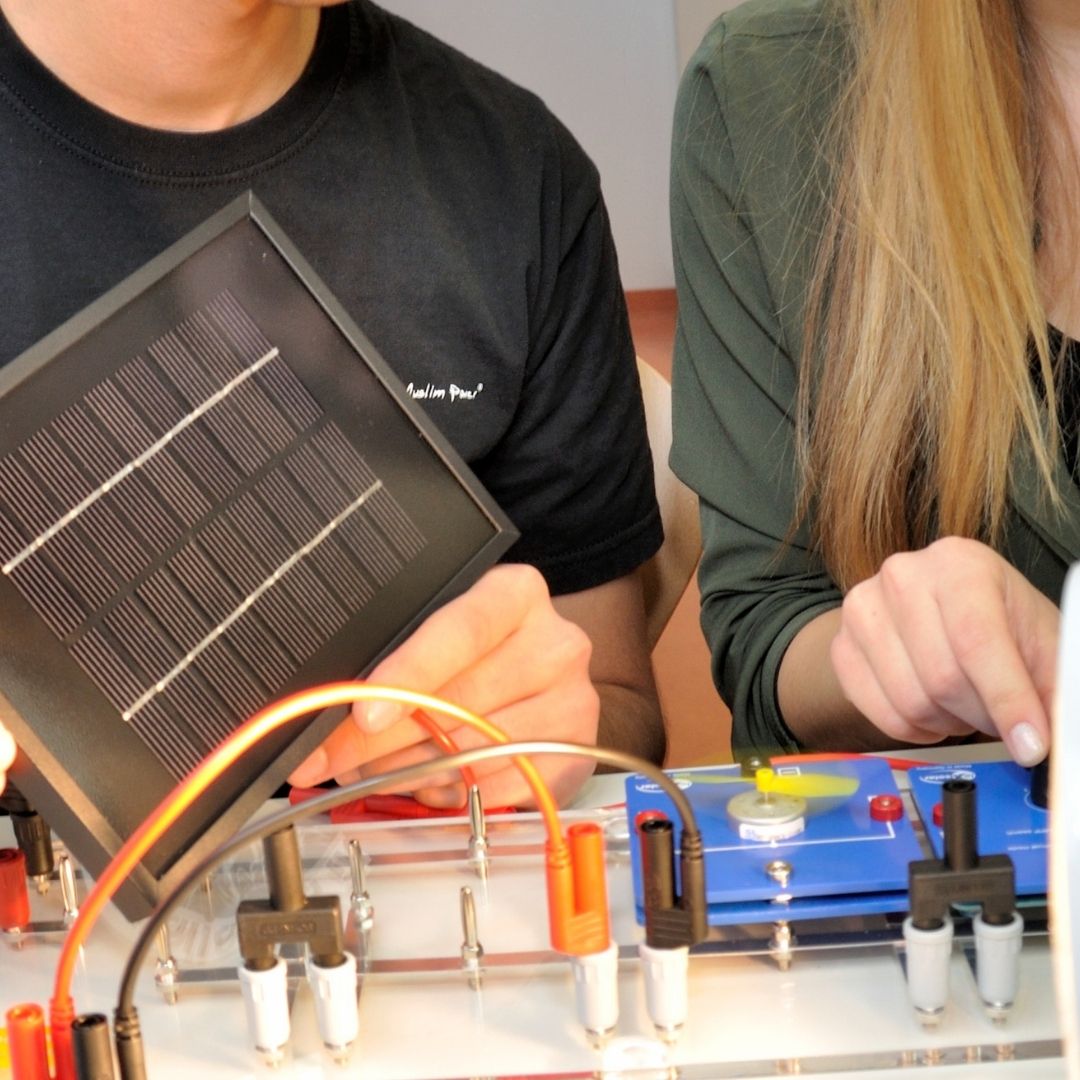
leXsolar’s portable green energy learning systems are designed to supplement classroom instruction with engaging, hands-on STEM investigations that connect scientific theory to real-world applications. Each system supports inquiry-based learning through structured experiments that encourage observation, measurement, analysis, and problem-solving.
Included educational resources support both students and instructors with:
- Hands-on experimental activities
- Student investigation guides
- Instructor manuals
- Experiment setup and implementation support
This flexible approach lets educators integrate hands-on learning into science, technology, engineering, energy, and career and technical education programs while reinforcing key curriculum concepts through experimentation.
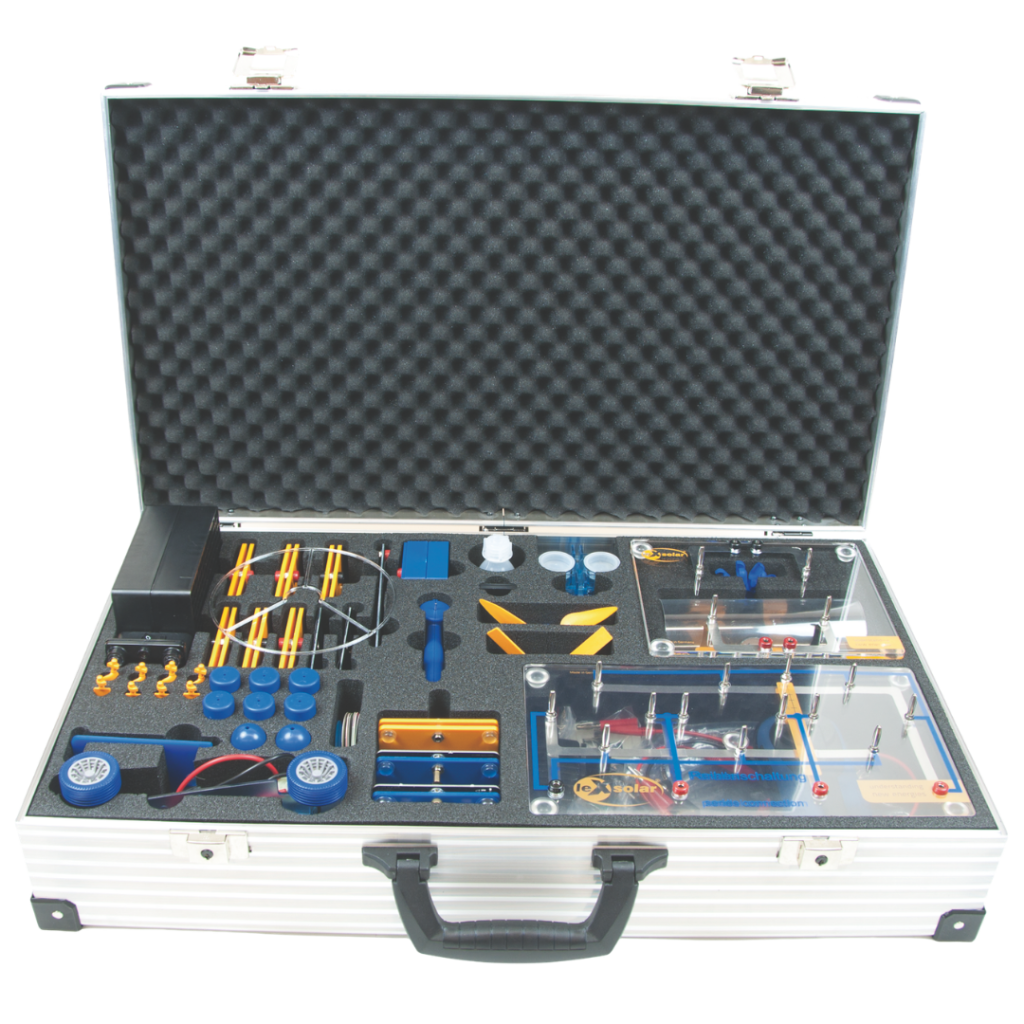
PV Professional: Photovoltaic Systems Training Kit Product Details
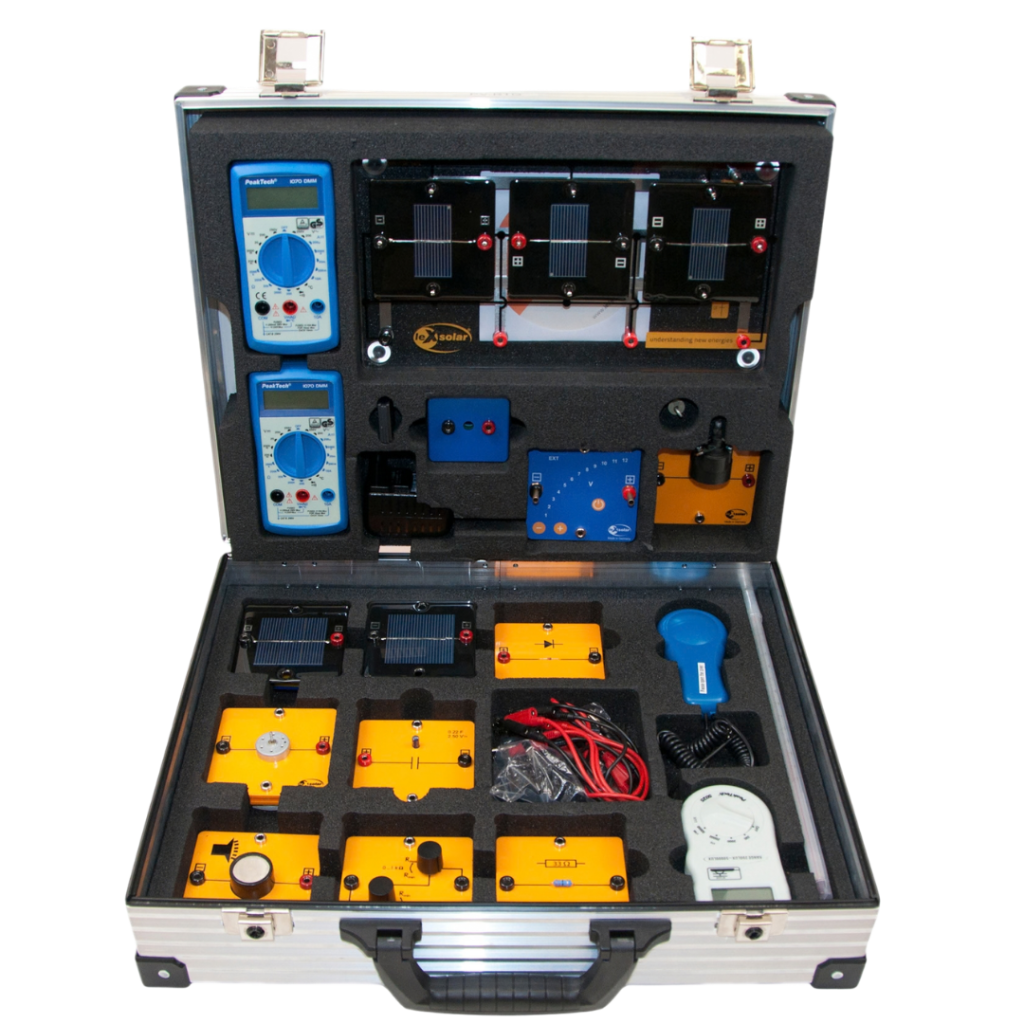
This photovoltaic training system includes:
- 3 × Solar Modules, 0.5 V / 420 mA
- 3 × Solar Modules, 0.5 V / 840 mA
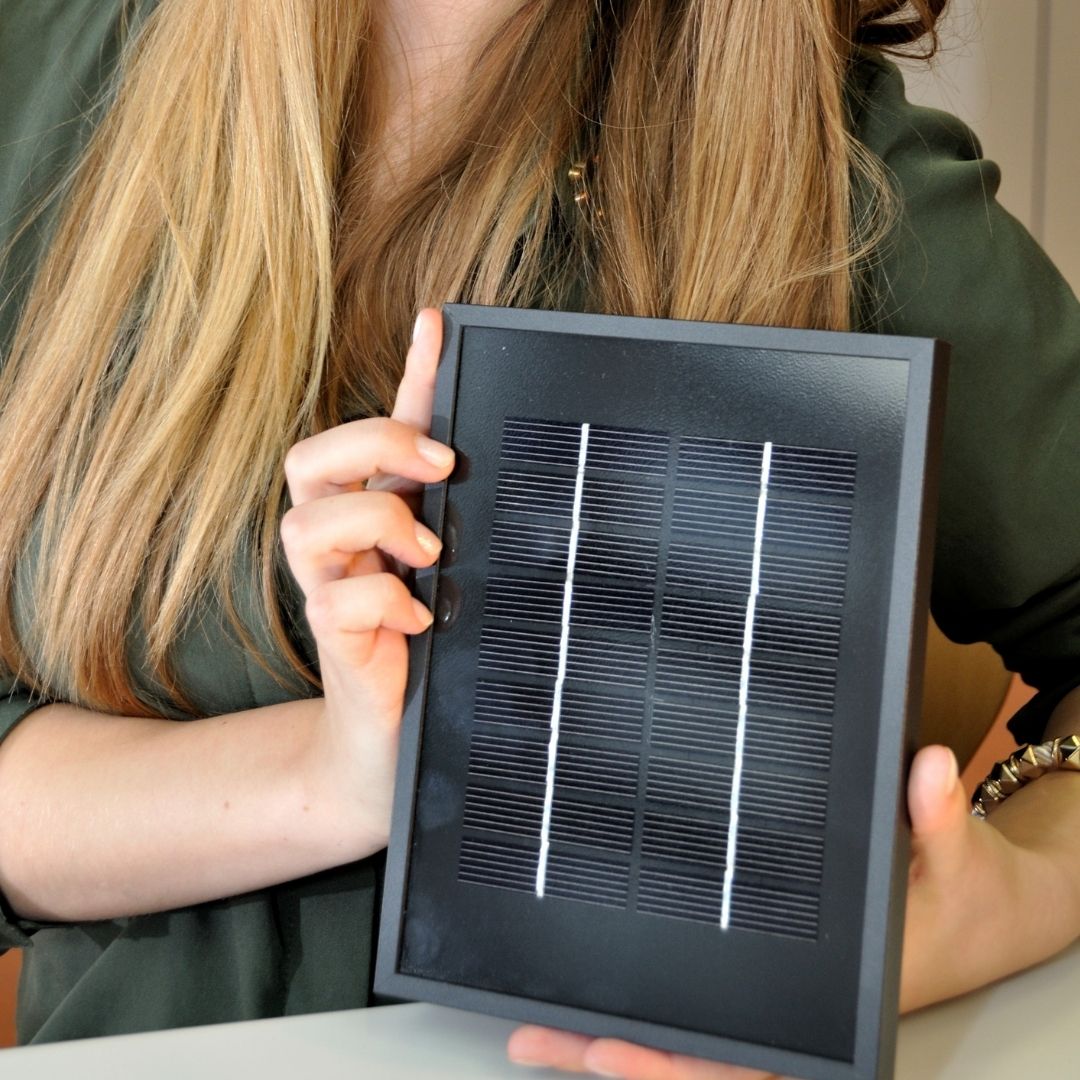
- Solar Module, 5.33 V / 370 mA
- Professional Base Unit
- Diode Module Pro
- Potentiometer Module Pro
- Shunt Regulator Module Pro
- Series Regulator Module Pro
- PWM Regulator Pro
- MPP Tracker Pro
- Deep Discharge Protection Module Pro
- DC/AC Inverter Pro
- Capacitor Module Pro
- Motor Module Pro
- Light Bulb Module Pro
- High-Brightness LED Module Pro
- Radio Module Pro
- 2 × Triple Resistor Modules Pro
- 10, 33, and 100 Ohm Resistor Plug Elements
- 3 × Lighting Modules
- Base for Solar Panel
- 2 × AV Measurement Modules
- PowerModule
- Solar Cell Cover Set
- Laboratory Thermometer
- Propeller
- Lamp Housing and Illuminant
- Safety Test Leads and Short-Circuit Plugs
- Layout Diagram
- Instruction Manual
- Experiment Handbook
- Startup Information
- Aluminum Carrying Case
Typical Practical Tasks
- Measure voltage, current, and electrical power
- Verify Ohm’s Law
- Investigate series and parallel resistor circuits
- Connect solar cells in series and parallel
- Investigate solar output versus cell surface area
- Measure the effects of angle of incidence on solar output
- Investigate illumination levels and photovoltaic performance
- Analyze the effects of shading on solar cells and modules
- Generate solar cell I-V characteristic curves
- Determine maximum power point and fill factor
- Analyze the effect of temperature on I-V characteristics
- Investigate the temperature coefficient of solar cells
- Configure laboratory-scale off-grid PV systems
- Investigate shunt and series regulators
- Compare PWM and series regulation
- Analyze MPP tracker operation
- Investigate deep-discharge protection
- Explore DC/AC inverter operation and output
Requirements
- Power: Standard AC electrical supply for the included PowerModule and lighting equipment. The PowerModule accepts 110-230 V AC, 50-60 Hz.
Technical Specifications
- Case Dimensions: Approx. 25.2 × 14.6 × 6.5 in
- Weight: Approx. 16.1 lbs
- Primary Solar Modules: 0.5 V / 420 mA and 0.5 V / 840 mA configurations
- Larger Solar Module: 5.33 V open-circuit voltage, 370 mA short-circuit current, 1.5 W peak power
- PowerModule Output: 0-12 V DC, up to 2 A and 24 W
- Capacitor: 5 F, 5.4 V
- DC/AC Inverter Output: 4.5 V AC with adjustable frequency from 0.5-15 Hz